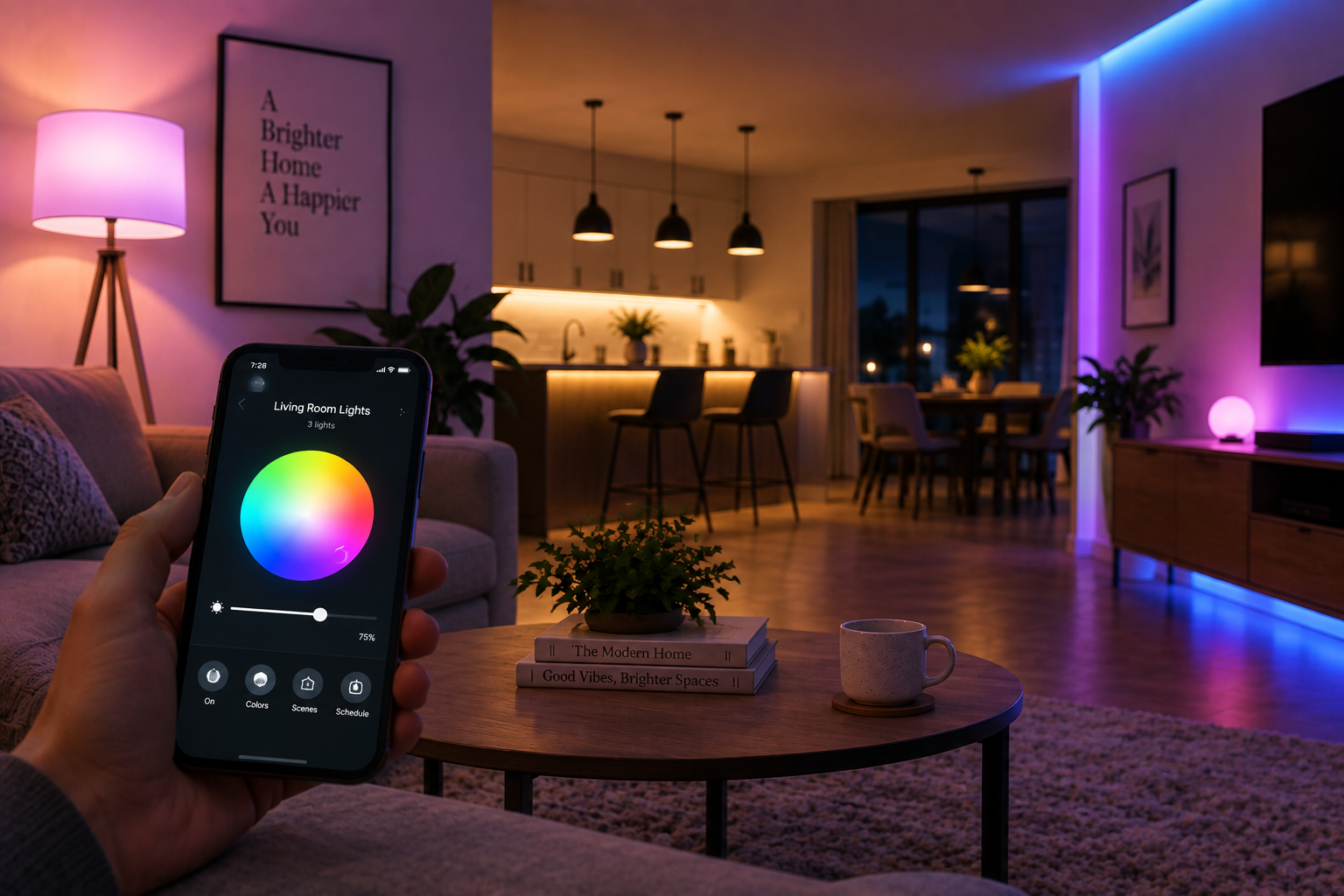
Lighting can influence how comfortable, functional, and inviting a room feels. Smart LED lights give you more control over your home lighting by combining energy-efficient LED technology with convenient features such as app controls, scheduling, dimming, and color adjustments.
Instead of relying solely on a traditional wall switch, you can adjust compatible smart lights from a smartphone, voice assistant, remote control, or automated routine. This flexibility may make them useful for bedrooms, living rooms, kitchens, home offices, entertainment spaces, and other areas where lighting needs change throughout the day.
What Are Smart LED Lights?
Smart LED lights are LED-based lighting products equipped with technology that allows you to control certain settings electronically. Depending on the product, you may be able to switch lights on or off, adjust brightness, select colors, change white-light temperatures, create schedules, or build automated routines.
Some lights connect directly to your home Wi-Fi network, while others use Bluetooth or communicate through a compatible smart-home hub.

Smart lighting products are available in several forms, including:
- Standard smart bulbs
- LED light strips
- Smart ceiling lights
- Lamps and floor lights
- Outdoor smart lighting
- Decorative light panels
- Under-cabinet lighting
The right option depends on where you plan to install the lights and which features matter most to you.
How Smart LED Lights Make Everyday Lighting More Flexible
One of the main advantages of smart LED lights is the ability to change your lighting without replacing fixtures or manually adjusting several switches.
For example, you might prefer brighter, cooler lighting while working during the day and softer, warmer lighting while relaxing in the evening. Compatible smart lighting lets you make these changes from an app or through preset scenes.
Some systems also allow multiple lights to be grouped together. This can make managing several bulbs or fixtures in the same room considerably easier.
Control Lighting From Your Smartphone
Many app controlled lights let you manage lighting through a manufacturer’s mobile application.
Depending on the system, app controls may include brightness adjustment, color selection, timers, schedules, room grouping, and preset lighting scenes.
Remote controls can be particularly convenient when a light switch is difficult to reach or when you want to adjust several lights simultaneously.
Keep in mind that remote access away from home can depend on the product, internet connection, account settings, and smart-home platform.
Create Different Moods With Color Changing LED Lights
Color changing LED lights provide more decorative flexibility than conventional white bulbs. Some models offer millions of potential color combinations, while others provide a smaller selection of preset colors.
Different colors can be useful for movie nights, gaming setups, parties, seasonal decorations, or ambient background lighting.
However, color capability may not be necessary for every room. In kitchens, bathrooms, and workspaces, adjustable white-light temperature and brightness may be more useful than extensive RGB color controls.
Choosing features based on the room’s actual purpose can help you avoid paying for functions you rarely use.
Adjust Color Temperature for Different Activities
Many smart bulbs allow you to change the appearance of white light from warm to cool.
Warm white lighting tends to create a softer atmosphere suitable for bedrooms, lounges, and relaxing spaces. Cooler white lighting can provide a crisp appearance that may work well in kitchens, offices, and task-oriented areas.
Use Voice Controlled Lighting for Hands-Free Convenience
Some smart lighting products integrate with compatible voice assistants, creating voice controlled lighting.
After completing the required setup, you may be able to use simple voice commands to turn lights on or off, change brightness, select colors, or control a group of lights.
This can be handy when you’re cooking, carrying groceries, relaxing on the sofa, or entering a dark room.
Compatibility varies between manufacturers, so check which smart-home ecosystems a light supports before buying.
Set Lighting Schedules and Automated Routines
Scheduling is another practical feature of smart home lighting.
You might schedule bedroom lights to gradually brighten in the morning, switch outdoor lights on around evening hours, or turn certain lights off automatically at night.
Automation options vary considerably between products. Some basic bulbs offer simple timers, while more advanced smart-home systems can coordinate lights with compatible sensors, switches, and other connected devices.
A good starting point is to automate repetitive lighting tasks rather than creating complicated routines for every room.
Consider Energy Efficient Lighting
LED technology generally uses substantially less electricity than traditional incandescent lighting while providing comparable light output. LEDs also typically have longer operating lifespans than incandescent bulbs.
Choosing energy efficient lighting can therefore help reduce electricity consumption associated with household lighting.
Smart features may offer additional ways to manage usage. Schedules and automated shutoff routines, for example, can help prevent lights from remaining on longer than necessary.
Actual energy use still depends on factors such as bulb wattage, brightness settings, operating hours, and the number of lights installed.
Wi-Fi LED Bulbs Versus Hub-Based Smart Lights
Wi-Fi LED bulbs can often connect directly to your home wireless network without requiring a separate hub. This may make them relatively straightforward for someone starting with only a few smart bulbs.
Hub-based systems use a central device to communicate with compatible lights. Although the additional hardware adds another component to the setup, hubs may offer benefits when managing larger smart-lighting systems.
Bluetooth bulbs provide another option. They can be convenient for basic local control, although their range and remote-access capabilities may be more limited.
Before choosing a system, consider how many lights you eventually want to connect rather than focusing solely on your first bulb.
What Should You Look for When Choosing Smart LED Lights?
Smart lighting products vary significantly in features and compatibility. Comparing a few key specifications can make choosing easier.
Brightness
Check brightness in lumens rather than judging a bulb primarily by wattage. Higher lumen ratings generally indicate greater light output.
Color Options
Decide whether you need standard white, adjustable white temperature, or full-color RGB lighting.
Connectivity
Determine whether the lights use Wi-Fi, Bluetooth, a dedicated hub, or another smart-home communication standard.
Smart-Home Compatibility
Check compatibility with any smart-home ecosystem or voice assistant you already use.
App Features
Look at available scheduling, grouping, scene creation, automation, and remote-control features.
Bulb and Fixture Type
Confirm that the bulb base, size, shape, and electrical specifications are appropriate for your fixture.
Indoor or Outdoor Use
Lights intended for outdoor installation should have an appropriate environmental or weather-resistance rating for their intended location.
Where Can You Use Smart LED Lights?
Different rooms may benefit from different smart-lighting configurations.
In a living room, adjustable brightness and warm tones can create comfortable ambient lighting, while colors can add atmosphere during entertainment.
For a bedroom, dimming and scheduled routines may provide more useful everyday functionality.
In a home office, adjustable white lighting can help you tailor illumination to different working conditions.
A kitchen may benefit from brighter task lighting and smart under-cabinet strips.
For outdoor areas, compatible smart fixtures can provide scheduled lighting around patios, entrances, pathways, and gardens.
Matching the lighting features to each space usually produces a more practical setup than installing identical smart bulbs everywhere.
Are Smart LED Lights Worth Considering?
Smart LED lights can be useful when you want greater control over brightness, schedules, colors, or home-lighting routines. Their value depends largely on which smart features you will actually use.
If you only need basic illumination from a single switch, a conventional LED bulb may be sufficient. If you regularly adjust brightness, want scheduled lighting, enjoy customizable colors, or already use connected home devices, smart lighting may offer meaningful convenience.
Starting with one frequently used room can help you determine which features are genuinely useful before expanding your system.
Building a Smarter and More Flexible Lighting Setup
Smart lighting can make everyday illumination easier to customize without requiring complicated changes to your home. From Wi-Fi LED bulbs and color changing LED lights to schedules and voice controlled lighting, there are options for simple installations as well as larger connected-home systems.
When selecting smart LED lights, focus on brightness, connectivity, compatibility, energy use, and the features that fit your daily routine. A carefully chosen setup can provide flexible lighting while keeping control straightforward and practical.