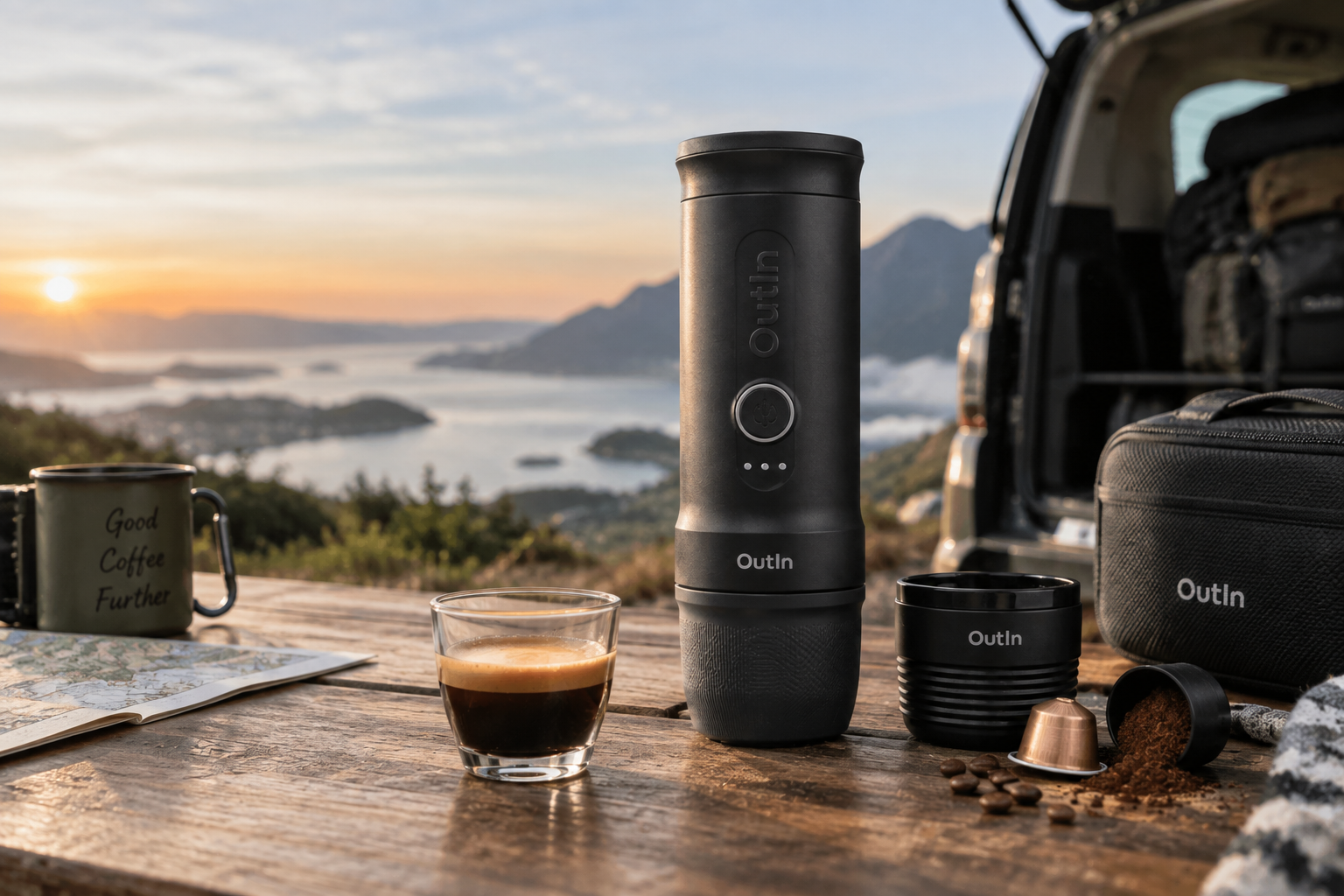
A portable espresso machine gives you a convenient way to prepare espresso when a full-size coffee maker is unavailable. Compact designs make these devices useful for travel, camping, office breaks, road trips, and even small kitchens where counter space is limited.
Portable models vary widely. Some rely entirely on manual pressure, while others use rechargeable batteries to heat water and extract coffee automatically. Understanding these differences can help you choose a machine that fits your coffee habits, available space, and typical travel routine.
What Is a Portable Espresso Machine?
A portable espresso machine is a compact coffee maker designed to produce concentrated coffee using pressure. Unlike conventional countertop espresso machines, portable versions prioritize lightweight construction, simple operation, and easy storage.
Depending on the model, you may use ground coffee or compatible coffee capsules. Manual machines typically require you to add hot water before generating pressure by hand. Electric models may include built-in water heating and automated extraction.

This flexibility makes portable espresso makers appealing to people who want better control over their coffee away from home.
How Does a Portable Espresso Machine Work?
The basic brewing process is similar across many portable models. Hot water passes through finely ground coffee under pressure, extracting flavor compounds and creating a concentrated beverage.
However, the way the machine generates heat and pressure can differ.
Manual portable machines usually require preheated water. You add coffee grounds, pour in the water, and operate a pump or piston to create pressure.
Electric portable machines use a rechargeable battery or external power source. Certain models can heat cold water before automatically extracting the coffee.
Capsule-compatible machines simplify preparation by using pre-portioned coffee capsules instead of loose grounds.
These differences can significantly affect portability, preparation time, cleanup, and overall convenience.
Portable Espresso Machine Features Worth Considering
When comparing models, focus on practical features rather than appearance alone.
Size and Weight
A good travel espresso maker should fit comfortably inside your backpack, suitcase, work bag, or vehicle storage compartment. Check the machine’s dimensions and weight before buying, especially if you plan to carry it while hiking or traveling by air.
Smaller machines tend to be easier to transport, although compact dimensions may mean a smaller water reservoir.
Manual or Electric Operation
Manual machines can be useful when access to electricity is limited. However, you’ll usually need another method for heating water.
A rechargeable espresso maker can offer greater convenience because some models heat and brew automatically. The tradeoff is additional weight and the need to recharge the battery.
Ground Coffee and Capsule Compatibility
Think about how you prefer to prepare your coffee. Ground coffee provides more flexibility when choosing beans, grind size, and roast level.
Capsules offer easier preparation and less mess. Some portable machines support both, giving you additional options when traveling.
Water Heating
Not every portable espresso maker heats water.
If you regularly camp or travel somewhere without easy access to hot water, a self-heating model may be especially useful. For office or hotel use, a manual machine can work well when a kettle is readily available.
Battery Capacity
Battery performance matters when choosing an electric model. Heating cold water generally consumes considerably more power than brewing with water that is already hot.
Look at the manufacturer’s stated number of brewing cycles per charge and check whether those estimates are based on cold or preheated water.
Ease of Cleaning
Coffee oils and fine grounds can collect around brewing components. Removable baskets, capsule adapters, and washable parts may simplify daily maintenance.
A simple internal design can also be helpful when you’re cleaning the machine somewhere without access to a full kitchen.
Portable Espresso Machine vs Traditional Espresso Machine
A traditional espresso machine generally offers greater brewing control, larger water capacity, and features such as steam wands. However, these machines require significantly more space and usually need continuous access to electricity.
A compact espresso machine prioritizes portability. It may sacrifice some capacity and advanced controls, but its smaller design allows you to prepare coffee in places where conventional equipment would be impractical.
Your better option depends on where you drink coffee most often. A countertop machine may suit regular home brewing, while a portable model can complement it during travel.
Where Can You Use a Portable Espresso Machine?
One advantage of portable coffee equipment is versatility.
Travelers can carry a machine for hotel stays, while campers can pair a manual model with a camping kettle. Commuters may keep one at work, and drivers can use compatible models during road-trip stops.
Before using an electric model outdoors or inside a vehicle, follow the manufacturer’s charging, temperature, water, and electrical safety instructions.
How to Make Better Espresso With a Portable Machine
Equipment matters, but preparation can have an equally noticeable effect on your coffee.
When using ground coffee, start with freshly roasted beans and grind them shortly before brewing when practical. Use the grind size recommended by the machine manufacturer because grounds that are too coarse or too fine can affect extraction.
Measure your coffee and water consistently. This makes it easier to adjust your recipe if the drink tastes unusually weak, bitter, or sour.
For machines without built-in heating, use water within the temperature range recommended by the manufacturer. Preheating the brewing chamber may also help reduce heat loss on certain manual models.
How to Clean a Portable Espresso Machine
Regular cleaning can help maintain flavor and keep moving components functioning correctly.
Remove used grounds or capsules after brewing. Rinse removable brewing components according to the manufacturer’s directions and allow them to dry thoroughly before storage.
Avoid immersing battery-powered sections in water unless the manufacturer specifically states that they are waterproof. Periodically check seals, filters, baskets, and adapters for coffee residue or wear.
Following the product’s cleaning instructions is especially important because maintenance requirements vary between machines.
Is a Portable Espresso Machine Good for Camping?
It can be a practical choice, but your camping setup matters.
A manual espresso maker may work particularly well for remote trips because it does not depend on batteries. You’ll still need a safe method for heating water.
Rechargeable machines may be more convenient for campsites with electricity, vehicles with suitable charging equipment, or shorter trips where the available battery capacity is sufficient.
Consider weight, durability, water availability, cleaning requirements, and power access before packing one.
How to Choose the Right Portable Espresso Machine
Start by considering where you expect to use the machine most often.
For frequent travelers, compact dimensions and low weight may take priority. Campers might value manual operation and durable construction, while commuters may prefer automatic brewing and USB charging.
You should also compare coffee compatibility, water capacity, heating capability, charging time, brewing controls, replacement parts, and cleaning requirements.
Price matters, but a machine that matches your routine can provide more practical value than one with features you rarely use.
Final Thoughts on Choosing a Portable Espresso Machine
A portable espresso machine can make freshly prepared espresso more accessible when you’re traveling, working, camping, or dealing with limited kitchen space. Manual designs provide straightforward brewing without relying on batteries, while electric models can offer automated heating and extraction.
Before choosing one, consider how you’ll heat water, what type of coffee you prefer, how often you’ll recharge the machine, and how easily you can clean it. Matching those features to your routine can help you find a portable coffee setup that’s convenient to use wherever your day takes you.