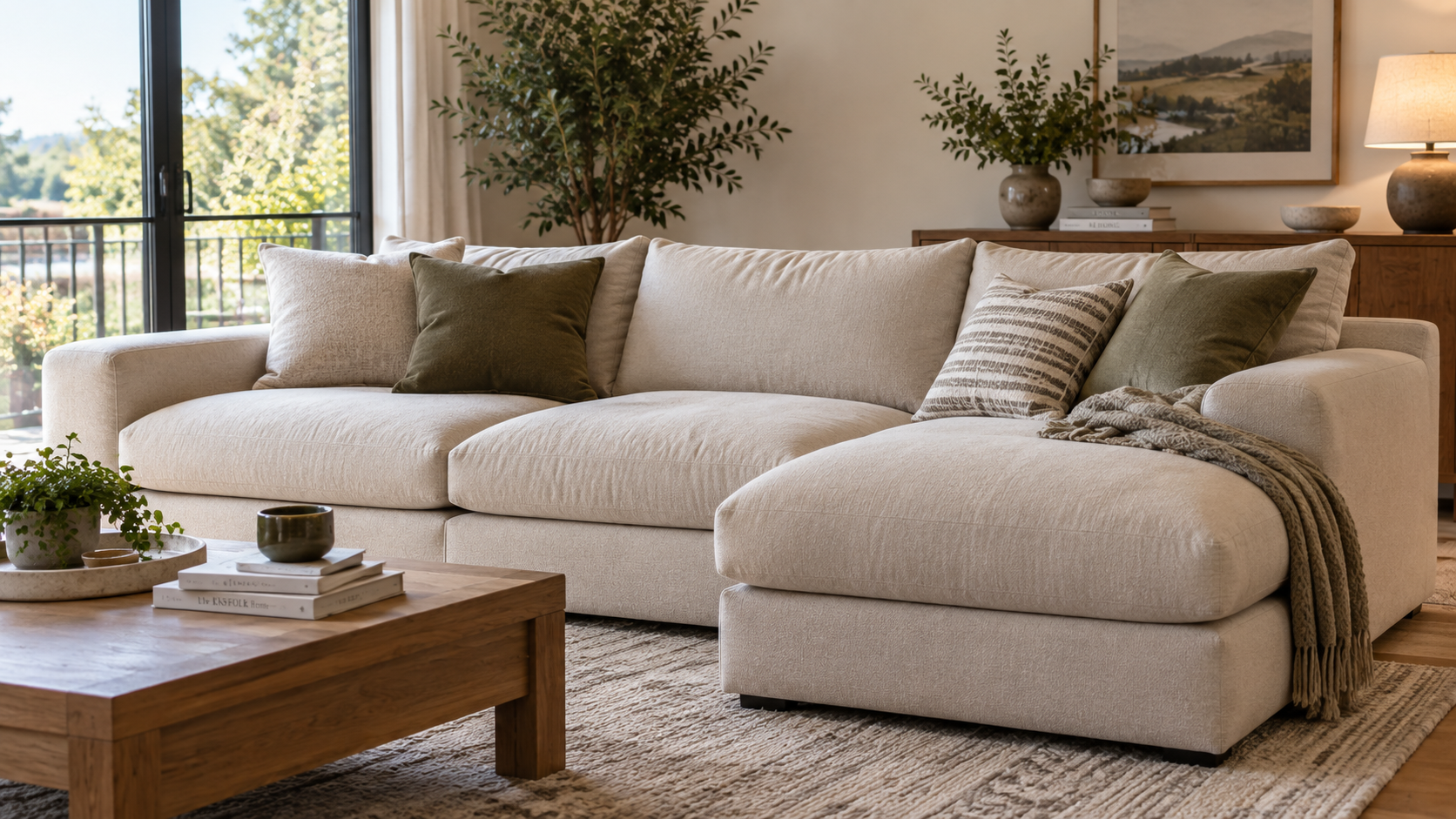
A comfortable sofa can make your living room more enjoyable for relaxing, reading, watching TV, or spending time with family. Yet comfort is highly personal. A sofa that feels supportive to one person may feel too firm, deep, or low to someone else.
That is why choosing a sofa involves more than finding a design that looks good online. Seat depth, cushion construction, frame quality, upholstery, dimensions, and your usual sitting position can all affect how the furniture feels over time.
Before buying, compare these details carefully so you can narrow down the options that suit your room and the way you actually use your sofa.
What Makes a Comfortable Sofa Worth Considering?
The best comfortable sofa for your home should balance softness with enough support to help you maintain a natural sitting position. Instead of focusing entirely on plush cushions, look at how the different parts of the sofa work together.

Important features to compare include:
- Seat depth and height
- Backrest height and angle
- Cushion filling and firmness
- Frame materials
- Suspension system
- Upholstery texture
- Armrest height
- Overall dimensions
Your preferred sitting position matters as well. If you normally sit upright, a shallower seat may feel more natural. If you like curling up, lounging, or stretching out, a deep seat sofa may provide additional room.
Start With the Right Seat Depth
Seat depth is one of the most important measurements to consider because it determines how your body fits into the sofa.
A shallower seat generally makes it easier to sit upright with your feet resting on the floor. Deeper seating gives you more space for lounging but may feel less supportive if your legs are shorter.
When comparing products online, check the actual seat depth rather than relying only on the sofa’s total depth. Two sofas with similar exterior dimensions can provide noticeably different seating experiences because of back cushion thickness and frame design.
If possible, sit on the sofa before purchasing it. Place your back naturally against the backrest and see where the front edge of the cushion meets your legs.
Pay Attention to Cushion Construction
Softness alone does not determine comfort. Cushion materials influence how a sofa feels when you sit down and how well the cushions maintain their shape.
Checking sofa cushion density can help you understand how supportive the seating may feel. Higher-density foam generally provides firmer support and can maintain its structure better than some lower-density alternatives, although density and firmness are separate characteristics.
Common cushion materials include:
- Foam
- Memory foam
- Polyester fiber
- Down or feather blends
- Foam-and-fiber combinations
- Pocket springs combined with foam
Plush fiber or feather-filled cushions can feel soft and relaxed but may require regular fluffing. Foam cushions usually offer a more structured shape and can require less daily maintenance.
Some sofas use layered cushion designs, combining a supportive foam core with softer material around the outside. This construction can provide a useful middle ground if you want cushioning without an excessively soft seat.
Look Beyond the Cushions to the Frame
A sofa’s internal structure deserves just as much attention as its cushions. Sofa frame construction affects stability and can influence how the furniture performs with regular use.
Manufacturers may use solid wood, engineered wood, plywood, metal, or combinations of materials. Construction quality can vary significantly even when similar materials are listed.
When comparing sofas, look for detailed information about:
- Frame materials
- Reinforced joints
- Suspension system
- Maximum recommended weight
- Manufacturer warranty
- Cushion construction
You can also check independent customer reviews for recurring comments about squeaking, sagging, loose components, or structural movement. A handful of isolated complaints may not tell you much, but repeated observations can highlight issues worth investigating.
Choose Upholstery for Comfort and Everyday Use
Upholstery affects both how a sofa feels against your skin and how practical it is to maintain.
A durable upholstery fabric may be particularly useful in busy households, especially when the sofa is used every day. Consider how the material handles abrasion, spills, sunlight, pet hair, and routine cleaning.
Popular upholstery choices include cotton blends, linen blends, polyester, microfiber, velvet, leather, and performance fabrics.
Before choosing, ask yourself practical questions. Will children use the sofa regularly? Do you have pets? Is the sofa positioned near a sunny window? Are removable cushion covers important to you?
Checking manufacturer cleaning instructions before purchasing can prevent surprises later. Some covers can be removed, while others require spot cleaning or professional care.
Consider Your Preferred Sitting Position
People do not all use sofas in the same way. Your preferred position should influence the type of seating you choose.
An ergonomic sofa typically focuses on supportive dimensions and seating angles rather than simply providing maximum softness. If you prefer sitting upright, pay attention to back support, seat height, and whether your feet can rest naturally on the floor.
For lounging, you may prefer deeper seats, softer back cushions, and wide armrests. Taller users may appreciate additional seat depth and higher backrests, while shorter users may find a shallower seat easier to use.
This is why trying several sofa styles in person can be valuable. Sit naturally instead of testing each sofa for only a few seconds.
Decide How Much Seating You Actually Need
Before shopping, consider how many people normally use your living room.
A standard two- or three-seat sofa may be enough for a smaller household. Larger families or people who regularly entertain guests might consider a sectional sofa for additional seating.
However, more seating is not automatically better. Large furniture can overwhelm a compact room and reduce walking space.
Measure:
- The available wall and floor space
- Doorways and hallways
- Staircases and elevators
- Clearance around coffee tables
- Walking routes through the room
- Space required for reclining features, when applicable
Marking the sofa dimensions on your floor with painter’s tape can help you visualize its footprint before ordering.
Compare Sofa Types Before Buying
Different sofa designs work for different lifestyles.
Standard Sofas
A traditional sofa is versatile and usually easier to position than larger modular furniture. It can work well in small and medium-sized living rooms.
Sectionals
Sectionals provide generous seating and can work particularly well in larger living spaces. Some modular models allow you to change the configuration later.
Reclining Sofas
Reclining models allow you to adjust your seating position and elevate your legs. Check the clearance requirements and mechanism before buying because these models may require more floor or wall space.
Sleeper Sofas
A sleeper sofa combines seating with occasional sleeping space. If overnight use is important, evaluate both the sitting cushions and mattress rather than judging the product solely as a sofa.
Loveseats
Loveseats can be useful in apartments, bedrooms, offices, or living rooms where a full-size sofa would take up too much space.
How Firm Should Your Sofa Be?
There is no single firmness level that works for everyone.
A softer sofa can feel cozy for lounging, but very soft cushions may make getting up more difficult for some people. Firmer seating can provide greater resistance and a more structured sitting position.
When testing firmness, spend several minutes sitting in your normal position. Notice whether you sink excessively, feel pressure around your hips, or need to keep adjusting your posture.
Check the Backrest and Armrests
Backrest design is easy to overlook when shopping online.
High backs can provide additional upper-body support, while lower backs create a streamlined appearance but may provide less support around the shoulders and neck. Loose back cushions can feel plush and adjustable, whereas fixed backs tend to maintain a more structured appearance.
Armrests also influence comfort. Wide, padded arms can be convenient for lounging, while narrow arms preserve more seating space within a compact overall footprint.
Think about how you naturally use your current sofa. If you frequently lean against an armrest, its height and padding may matter more than you initially expect.
Should You Buy a Sofa Online or In Store?
Both options have advantages.
Shopping online gives you access to a wider selection and makes comparing dimensions, materials, prices, warranties, and customer reviews relatively easy. The main limitation is that you cannot physically test the seating before ordering.
Shopping in a store allows you to assess cushion firmness, seat depth, back support, fabric texture, and overall scale directly.
If buying online, review:
- Full product dimensions
- Seat dimensions
- Cushion materials
- Frame materials
- Fabric composition
- Assembly requirements
- Delivery method
- Return conditions
- Warranty coverage
Product photographs can make furniture appear larger or smaller than it actually is, so measurements should carry more weight than appearance alone.
How Can You Compare Sofa Prices Effectively?
Price can vary considerably depending on size, materials, construction, upholstery, design, and additional features.
Rather than choosing solely by the lowest price, compare what you receive for the cost. A less expensive model may suit occasional use perfectly well, while a heavily used living-room sofa may justify closer attention to construction and replaceable components.
Compare similar products based on specifications rather than price alone. For example, check whether cushions are removable, covers are replaceable, modules can be purchased separately, or replacement parts are available.
Delivery charges can also change the final cost significantly, particularly for oversized furniture.
Read Customer Reviews Strategically
Reviews are most helpful when you look for patterns instead of focusing entirely on star ratings.
Search reviews for terms related to:
- Comfort
- Firmness
- Seat depth
- Cushion sagging
- Fabric quality
- Pilling
- Assembly
- Delivery
- Pet hair
- Cleaning
- Long-term use
Pay particular attention to reviews written after several months of ownership. First impressions can tell you how comfortable a sofa feels initially, while longer-term reviews may provide more information about cushion shape, fabric wear, and structural stability.
Frequently Asked Questions
What Is the Most Important Feature When Choosing a Sofa for Comfort?
Seat dimensions and cushion support are among the most important considerations. Your height, preferred sitting position, and desired firmness can determine which combination feels most natural.
Are Deep Sofas More Comfortable?
They can be for people who enjoy lounging, curling up, or sitting with their legs on the sofa. However, deeper seating may be uncomfortable for someone who prefers an upright position with their feet on the floor.
Is a Firm or Soft Sofa Better?
Neither is universally better. Softer cushions generally provide more sink-in comfort, while firmer cushions offer a more structured sitting surface. Your preferred posture and mobility should guide your choice.
How Do You Know if a Sofa Will Fit Through Your Door?
Compare the sofa’s width, height, depth, and diagonal measurements with every doorway, hallway, stairway, and elevator along the delivery route. Removable legs may provide additional clearance, but confirm this with the manufacturer.
Choosing a Sofa That Fits Your Lifestyle
Finding a comfortable sofa becomes easier when you focus on measurable features instead of appearance alone. Seat depth, cushion construction, upholstery, back support, frame quality, room dimensions, and your preferred sitting position all deserve consideration.
Measure your space carefully, compare specifications across several models, read long-term customer feedback, and test different seating styles whenever possible. A thoughtful comparison can help you choose a sofa that suits both your living space and everyday routine.