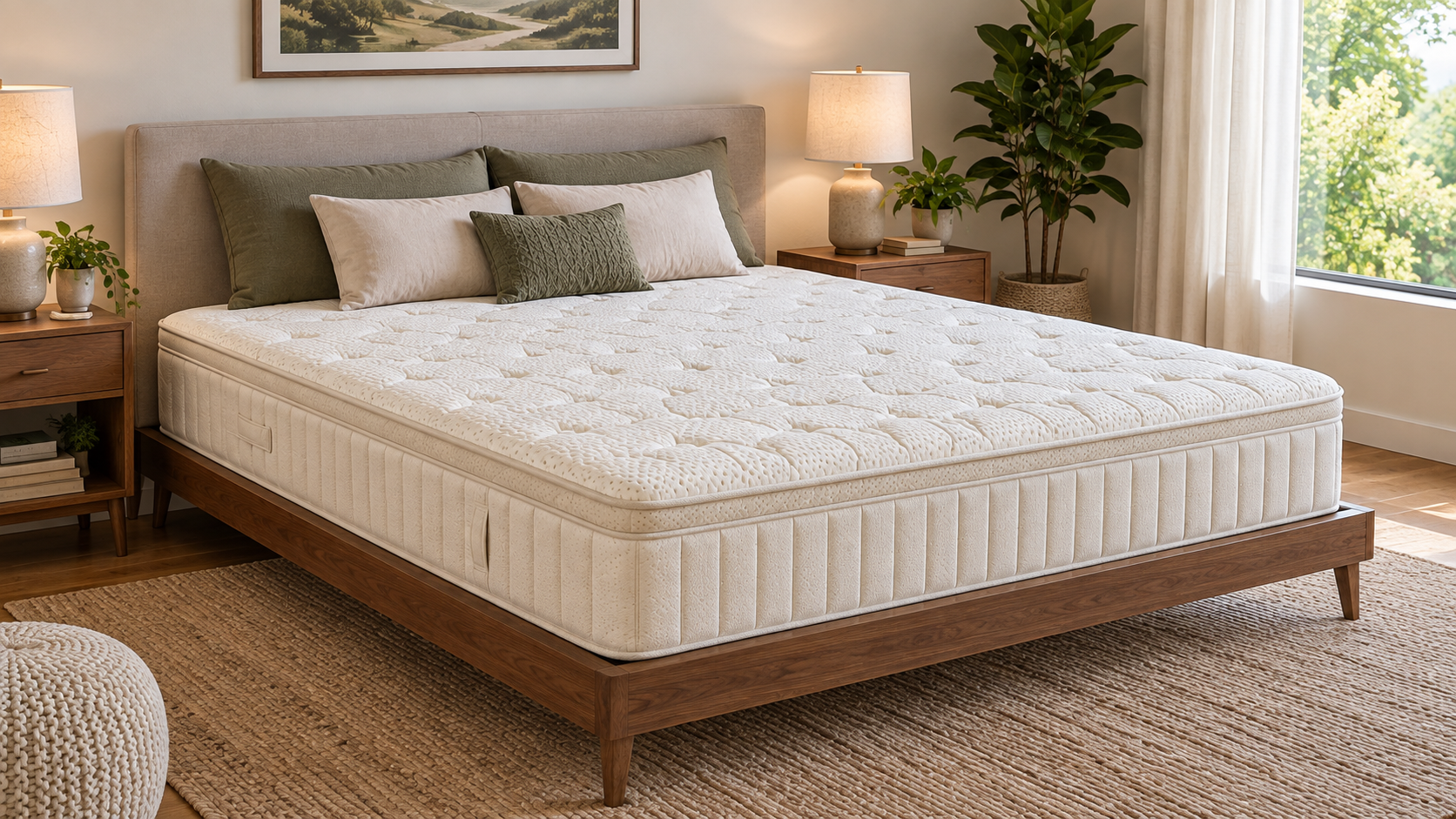
Choosing the right mattress can influence how comfortable and supported you feel throughout the night. A natural latex mattress is one option worth considering if you want responsive cushioning, durable materials, and a sleep surface that does not rely heavily on synthetic foam.
Natural latex is produced from rubber tree sap and processed into foam layers used in mattresses. Its distinctive feel combines cushioning with noticeable responsiveness, making it different from the deeper sinking sensation commonly associated with memory foam.
What Is a Natural Latex Mattress?
A natural latex mattress uses latex foam made primarily from natural rubber. Depending on the mattress design, latex may make up the entire mattress or appear alongside materials such as wool, cotton, or pocketed coils.
Two common latex manufacturing methods are Dunlop and Talalay. Dunlop latex generally feels denser and is frequently used for supportive mattress layers. Talalay latex tends to have a lighter, more consistent structure and is often selected for comfort layers.

When shopping, check the manufacturer’s material specifications carefully. Terms such as “latex mattress” do not automatically mean that every component is made from natural latex.
Why Choose a Natural Latex Mattress?
A major advantage of natural latex is its balance between cushioning and support. Rather than allowing your body to sink deeply, latex tends to compress under pressure and quickly return to its original shape.
This responsive quality can make changing sleeping positions easier. It may appeal particularly to combination sleepers who move between their back, side, and stomach during the night.
A quality latex foam mattress may also offer good long-term durability. Actual mattress lifespan varies considerably based on construction, latex quality, sleeper weight, usage, maintenance, and other materials used in the mattress.
Natural Latex Mattress Comfort and Pressure Relief
Comfort is highly personal, so no mattress firmness works equally well for everyone. However, latex can provide pressure relief by conforming moderately around heavier areas of your body while maintaining a supportive feel.
Side sleepers often prefer additional cushioning around their shoulders and hips. Back sleepers may prefer medium or medium-firm support, while some stomach sleepers favor firmer surfaces that limit excessive sinking around the midsection.
Your body weight and personal comfort preferences should also influence the firmness you choose.
Natural Latex vs Memory Foam
Understanding natural latex vs memory foam can make mattress shopping easier because the two materials have noticeably different characteristics.
Memory foam generally contours closely and creates more of a slow-sinking sensation. Latex responds more quickly to movement and often feels springier.
Latex may be preferable when you:
- Enjoy a responsive sleeping surface
- Frequently change sleeping positions
- Prefer less of a deep-hugging sensation
- Want a material known for durability
- Prefer mattresses containing naturally derived materials
Memory foam may appeal more if you enjoy pronounced contouring and slower-moving cushioning.
Neither material is automatically better. The best option depends on your sleeping position, firmness preference, budget, and preferred mattress feel.
Does Natural Latex Sleep Cool?
Temperature is another consideration when comparing breathable mattress materials. Latex foam typically has an open-cell structure, and some latex layers include ventilation holes that encourage airflow.
However, sleeping temperature depends on the entire mattress rather than latex alone. Mattress covers, comfort layers, bedding, room temperature, and your personal tendency to sleep warm can all affect how hot or cool your bed feels.
If temperature regulation matters to you, look beyond marketing claims and examine the complete mattress construction.
How Supportive Is a Latex Mattress?
A supportive latex mattress should help distribute body weight while limiting excessive sinking. Latex can compress where pressure is applied while maintaining resistance around other areas.
Some mattresses use multiple latex layers with different firmness levels. For example, a softer upper layer may provide cushioning while denser lower layers create structural support.
Hybrid designs can combine latex with individually wrapped coils. These mattresses may provide additional bounce and stronger edge support, depending on their construction.
Natural Latex Mattress Durability
Durability can make latex particularly attractive for shoppers thinking about long-term mattress ownership.
Natural latex is generally considered a resilient mattress material, but you should avoid assuming that every latex mattress will last for the same number of years. Latex density, layer thickness, foundation quality, mattress construction, and daily use all matter.
Check the manufacturer’s warranty carefully. Pay attention to what qualifies as a defect, how body impressions are measured, and whether specific foundations or bed frames are required.
What to Look for When Buying a Natural Latex Mattress
Before purchasing, compare more than price and firmness labels. Mattress companies do not necessarily define soft, medium, and firm in exactly the same way.
Consider these factors:
Latex composition: Check whether the mattress contains natural latex, synthetic latex, or a blend.
Firmness: Match firmness to your sleeping position, body weight, and personal preferences.
Layer construction: Review the thickness and material of each mattress layer.
Cover materials: Cotton and wool are commonly paired with latex, although construction varies by manufacturer.
Certifications: Look for clearly identified third-party certifications and verify what each certification actually covers.
Trial period: A home trial may give you time to determine whether the mattress works for your sleeping habits.
Return conditions: Check for return fees, pickup requirements, minimum trial periods, and other restrictions.
Warranty: Review coverage details rather than relying solely on the advertised warranty length.
Is an Organic Latex Mattress the Same as Natural Latex?
An organic latex mattress and a natural latex mattress are not necessarily the same.
“Natural” generally describes the source of the latex material, while “organic” should relate to specific certification standards. A mattress marketed as organic may contain certified organic latex, cotton, wool, or a combination of certified materials.
If organic materials matter to you, look for recognized certification details and verify which individual components have been certified.
Are Natural Latex Mattresses Good for Couples?
Latex may work well for couples because its responsive surface makes movement relatively easy. Depending on the construction, it can also limit some motion transfer between sleepers.
However, motion isolation varies by mattress. An all-latex model can behave differently from a latex hybrid containing springs.
Couples should also consider edge support, mattress size, individual firmness preferences, and differences in body weight before choosing a model.
How to Care for a Natural Latex Mattress
Proper care may help maintain mattress performance. Always follow the manufacturer’s instructions because requirements can vary.
Common care practices include:
- Use a suitable mattress foundation or bed frame.
- Keep the mattress dry and properly ventilated.
- Use a breathable mattress protector.
- Clean spills according to manufacturer instructions.
- Rotate the mattress if the manufacturer recommends doing so.
- Avoid folding or bending thick latex layers unless specifically permitted.
You should also check your bed frame periodically to ensure it continues providing adequate support.
Is a Natural Latex Mattress Worth Considering?
A natural latex mattress may be a practical choice if you prefer responsive cushioning, steady support, and naturally derived mattress materials. Its buoyant feel can be especially appealing if you dislike the deeper contouring commonly associated with memory foam.
Still, mattress comfort varies from person to person. Compare firmness, latex composition, construction, certifications, trial policies, warranties, and overall price before making your decision.