Choosing the right embroidery thread can affect how your finished design looks, feels, and holds up after repeated use.
Thread material, weight, sheen, strength, and compatibility with your fabric all play a part in the final result.
If you are shopping for thread, focusing only on color can lead to frustrating stitching problems. A beautiful shade may still break frequently, create unwanted bulk, or produce a finish that does not suit your design.
Knowing what separates common thread types can help you buy supplies that fit your machine, fabric, and intended project.

How Do You Choose the Right Embroidery Thread?
Start by looking at how you plan to stitch and where the finished item will be used. Embroidery thread made for a frequently washed shirt has different demands than thread used for framed decorative stitching.
Before buying, check these factors:
- Thread material
- Thread weight
- Fabric type
- Desired sheen
- Expected washing or wear
- Machine or hand-stitching requirements
- Available spool or skein size
- Manufacturer care instructions
These details can help narrow your options before you compare colors, quantities, and prices.
Machine Embroidery Thread for Automated Stitching
Machine embroidery thread is designed to feed consistently through embroidery machines running at relatively high stitching speeds.
Smooth feeding and consistent thickness can reduce problems such as frequent snapping, skipped stitches, or irregular coverage.
A common size for general machine embroidery is 40-weight thread. Finer thread can suit small lettering and detailed patterns, while thicker options can create stronger visual definition. Your machine, needle size, fabric, and design density should all be compatible with the selected thread.
Large cones may make sense if you regularly complete high-stitch-count designs or produce repeated logos. Smaller spools can be practical when you need several colors but use each shade less frequently.
Polyester Embroidery Thread for Durability
Polyester embroidery thread is commonly chosen for garments, uniforms, accessories, towels, and other items that may face frequent washing. Polyester fibers generally provide good strength and resistance to abrasion.
The thread can also maintain its appearance under regular use, making it practical for designs placed on clothing or household textiles.
Many polyester options have a noticeable sheen, though the exact finish varies by manufacturer and product line.
Polyester may suit you if durability is high on your buying checklist. Check the manufacturer’s washing guidance before using any thread on items that will face frequent laundering or cleaning products.
Rayon Embroidery Thread for a Smooth, Shiny Finish
Rayon embroidery thread is known for its smooth appearance and noticeable sheen. It can work well for decorative designs where color and surface finish have a major role in the final appearance.
Rayon is often used for decorative machine stitching, monograms, fashion details, and designs intended to catch light. It can require careful handling because thread performance may vary according to machine tension, needle choice, stitching speed, and design density.
If appearance is your main priority, comparing rayon and polyester samples can help you see the difference before committing to several spools.
Cotton Embroidery Thread for a Softer Appearance
Cotton embroidery thread provides a softer, less glossy finish than many synthetic options. This can suit traditional designs, quilting, heirloom-style projects, and decorative work where a matte appearance fits the design.
Cotton thread is available in different thicknesses, so matching the weight to your project matters. Fine cotton can handle small details, while heavier thread creates stronger texture and definition.
Because cotton does not have the same surface appearance as rayon or shiny polyester, it can create a distinctly different result even when you use similar colors.
Embroidery Floss for Hand-Stitched Projects
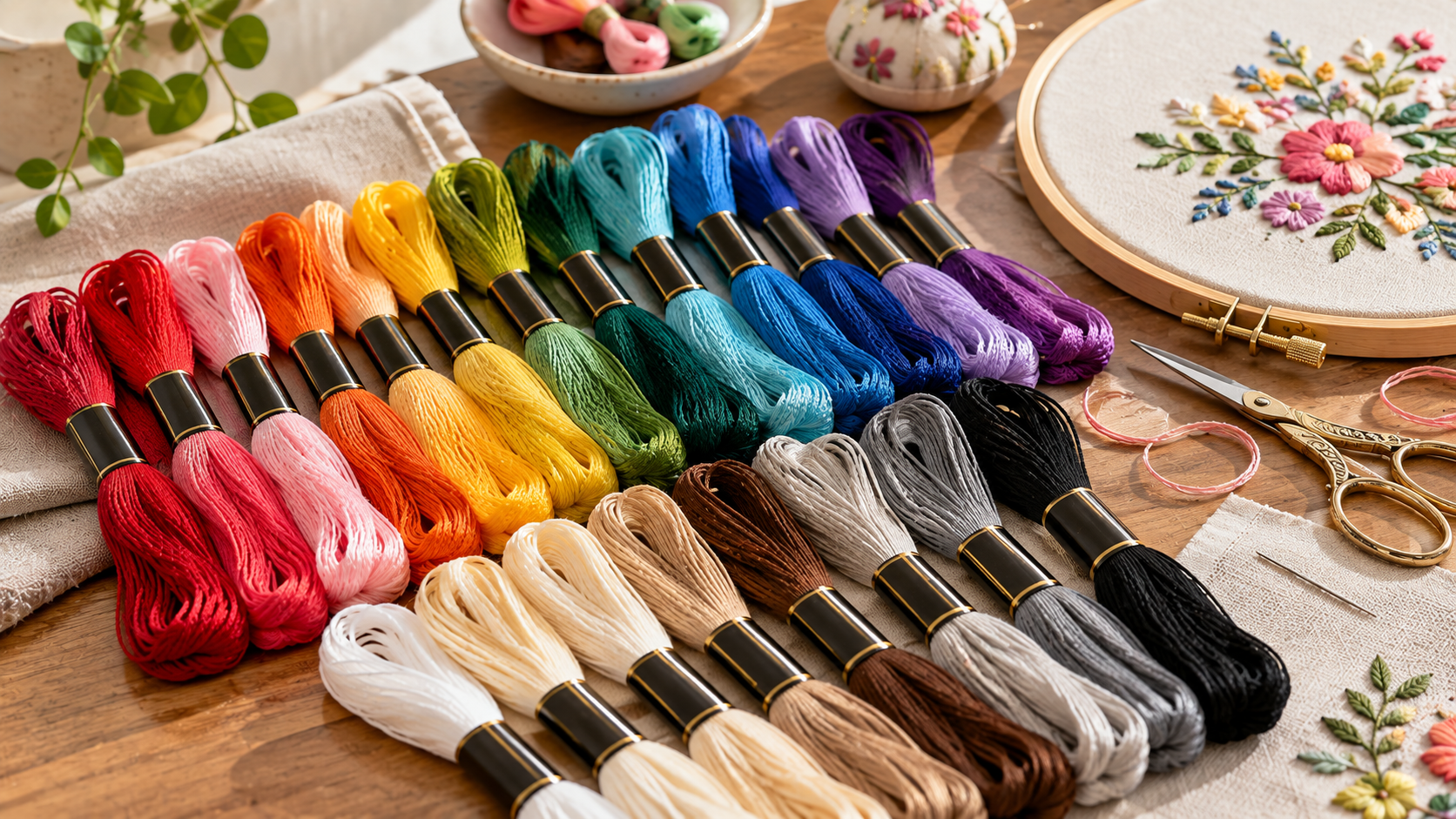
Embroidery floss is commonly used for hand embroidery, cross-stitch, friendship bracelets, and decorative needlework.
Standard stranded floss usually contains several strands that can be separated, allowing you to adjust the thickness of your stitches.
Using fewer strands can create fine lines and small details. Using additional strands can create thicker coverage and stronger texture. This flexibility makes floss practical for projects containing several stitch styles.
When comparing floss, look at fiber content, color availability, strand consistency, and colorfastness information. These factors can affect both the stitching process and the finished piece.
Comparing Common Thread Types
| Thread Type | Typical Finish | Common Uses | Main Buying Factor |
| Polyester | Smooth with sheen | Clothing, towels, accessories | Strength and wash resistance |
| Rayon | High sheen | Decorative designs and monograms | Surface appearance |
| Cotton | Soft and matte | Quilting and traditional embroidery | Natural-looking finish |
| Stranded floss | Varies by fiber | Hand embroidery and cross-stitch | Adjustable strand count |
The right choice depends on the look you want and the conditions the finished item will face.
Does Embroidery Thread Weight Matter?
Yes. Thread weight affects stitch coverage, detail, texture, and needle requirements. A finer thread can make small lettering or detailed designs easier to reproduce, while a thicker thread creates heavier lines.
Thread-weight numbering can be confusing because systems can differ among manufacturers. Instead of assuming two products with similar labels will behave identically, check the brand’s specifications and recommended needle sizes.
Testing a small section on scrap fabric is especially useful when switching thread brands, weights, or materials.
Match Your Thread to the Fabric
Fabric structure has a direct effect on stitching performance. Lightweight fabric may pucker under dense embroidery, while thick material may need a suitable needle, stabilizer, and thread setup.
For shirts and lightweight garments, pay attention to design density and stabilizer choice. Towels and textured fabrics may need added support so stitches remain visible above the surface.
Denim and heavier fabrics require needles capable of handling the material without damaging the thread.
A test sample can reveal tension problems, puckering, poor coverage, or unwanted color combinations before you stitch the final item.
Check Colorfastness and Care Requirements
Color matters, yet care requirements deserve equal attention. If your embroidered item will be washed regularly, check the manufacturer’s instructions regarding water temperature, detergent, bleach exposure, ironing, and drying.
Colorfastness can vary between materials and manufacturers. Testing dark or strongly saturated colors can be useful when stitching on light fabrics that may show dye transfer.
Keep the final use of the item in mind when comparing thread options. Decorative wall pieces face different conditions than uniforms, towels, bags, or children’s clothing.
What Should You Look for When Buying Embroidery Supplies?
When purchasing embroidery supplies, check compatibility instead of choosing each item separately. Thread, needles, stabilizers, hoops, fabric, and machine settings work together during stitching.
For thread specifically, check:
- Fiber material
- Weight or thickness
- Spool or skein quantity
- Recommended needle size
- Care instructions
- Colorfastness information
- Manufacturer compatibility guidance
Buying large thread sets can provide plenty of colors, yet individual spools may be a better purchase when you regularly use a smaller group of shades. Compare the amount of thread included rather than judging value by the number of colors alone.
Is Expensive Embroidery Thread Always Better?
Price alone does not determine suitability. A higher-priced thread may provide consistent construction, extensive color choices, or specialized characteristics, yet those benefits may not matter for every project.
Focus on thread consistency, fiber type, intended use, care requirements, and compatibility with your equipment.
Customer reviews can also help identify recurring concerns such as excessive breakage, tangling, inconsistent color, or poor spool construction.
Testing one spool before buying a large collection can reduce the chance of ending up with thread that does not work well with your setup.
How Should You Store Embroidery Thread?
Store thread away from excessive moisture, dust, and direct sunlight. Keeping spools and skeins organized can prevent tangling while making colors easier to locate.
Thread racks, storage boxes, spool cases, and divided containers can all work well.
Hand-stitching floss can be wrapped around bobbins and labeled with color numbers so replacement shades are easier to identify.
Good storage also helps you see what you already own before purchasing duplicate colors.
Frequently Asked Questions
What thread is commonly used for machine embroidery?
40-weight thread is widely used for general machine embroidery, though the suitable weight depends on the design, fabric, needle, and machine recommendations.
Can regular sewing thread be used for embroidery?
Some sewing threads may physically work in certain applications, yet they may produce a different finish or coverage than thread designed specifically for embroidery. Check your machine manual and test the combination first.
Is polyester or rayon better for embroidery?
The answer depends on the project. Polyester is commonly selected when durability and frequent washing matter. Rayon is often selected when a smooth, shiny decorative finish is the priority.
How many strands should you use for hand embroidery?
The strand count depends on the fabric, stitch type, and desired thickness. Stranded floss lets you separate strands and adjust coverage for fine details or heavier stitching.
Should embroidery thread match the fabric fiber?
Not necessarily. Thread selection usually depends on appearance, durability, washing requirements, stitch type, and equipment compatibility rather than matching the exact fiber content of the fabric.
Choosing Embroidery Thread With Confidence
Good thread selection starts with the project rather than the color chart. Think about your fabric, stitching method, desired finish, washing requirements, and thread weight before you buy.
Polyester can suit frequently used textiles, rayon can create a glossy decorative finish, cotton can produce a softer appearance, and stranded floss gives you control over thickness for hand stitching.
Checking specifications and testing your setup on scrap fabric can save time and reduce stitching problems.
Once the thread works well with your fabric, needle, stabilizer, and design, you can move forward with greater confidence in the finished result.