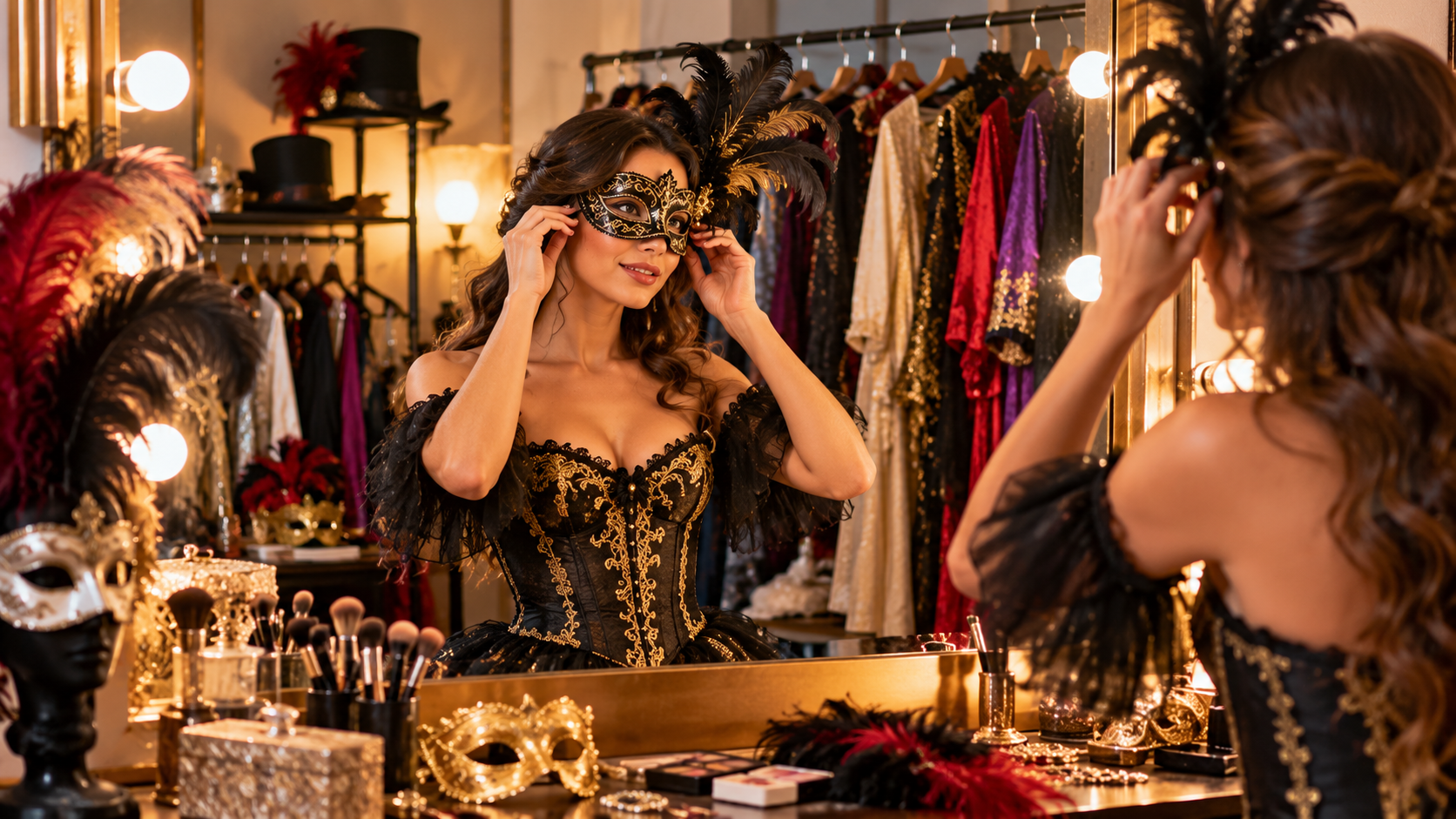
A memorable costume often comes down to the details. You can start with an impressive outfit, but the right accessories, makeup, shoes, and props can make the finished look feel considerably more complete.
Whether you’re dressing for a themed party, cosplay event, masquerade, theatrical production, or another special occasion, planning the entire look before getting dressed can save time and help everything work together.
Here are some practical ways to build a costume from the initial idea to the finishing touches.
Start With a Clear Theme
Before shopping for individual pieces, decide what you want your costume to communicate.

Your inspiration could come from a historical period, fantasy world, occupation, horror theme, fairy tale, masquerade, or completely original character.
A clear concept makes it easier to determine which details belong together. For example, a vintage-inspired costume might depend heavily on period-appropriate accessories, while a fantasy look could give you more freedom to experiment with dramatic colors and unusual materials.
You do not need to recreate every detail perfectly. Aim for a few recognizable elements that establish the overall theme.
Build Around the Main Outfit
Once you have a concept, choose the primary clothing pieces.
Consider the silhouette as well as the color. Long coats, fitted jackets, flowing dresses, capes, structured skirts, or exaggerated sleeves can immediately influence how a costume reads from across a room.
Fit also matters. You may spend several hours wearing the costume, so make sure you can comfortably sit, walk, and move.
Try everything on before the event rather than assuming individual pieces will work together.
Use Accessories to Strengthen the Look
Accessories can turn relatively simple clothing into a much more distinctive costume.
Depending on your theme, useful additions might include:
- Hats or headpieces
- Gloves
- Belts
- Jewelry
- Wigs
- Tights or hosiery
- Masks
- Capes or scarves
Choose accessories that support the same visual story rather than adding details simply because they look interesting.
A few coordinated pieces can often have more impact than numerous unrelated accessories.
Experiment With Masks and Makeup
Your face can become an important part of the costume.
A masquerade mask can provide an instant focal point, while makeup can help reinforce everything from a glamorous fantasy character to a theatrical horror look.
If you plan to use unfamiliar cosmetics, adhesives, prosthetics, or specialty makeup, follow product directions carefully. Test products in advance when appropriate and avoid applying materials too close to the eyes unless they are specifically intended for that purpose.
Give yourself enough preparation time on the day of the event. Detailed makeup usually takes longer than expected.
Add a Prop When It Makes Sense
Props can help communicate a character or theme quickly, but they should remain practical.
A magician might carry a wand, a fantasy character could use a decorative staff, and a detective-inspired costume might include a magnifying glass.
Consider where you will be wearing the costume before choosing a large prop. Crowded parties, conventions, and event venues may have rules concerning oversized or potentially hazardous items.
Lightweight props are generally easier to carry for several hours.
Don’t Forget Shoes
Shoes are sometimes an afterthought, yet they can affect both the appearance and comfort of your costume.
Choose footwear that complements the overall silhouette while remaining appropriate for the amount of walking or standing you expect to do.
If your ideal costume shoes are uncomfortable, consider bringing a more practical backup pair.
You can also use boot covers, decorative accessories, or other removable elements to change the appearance of comfortable footwear without purchasing shoes you are unlikely to wear again.
Test the Complete Costume Before the Event
Do a full dress rehearsal once you have assembled everything.
Put on the clothing, shoes, accessories, wig, mask, and any other major elements. Walk around, sit down, raise your arms, and check your costume from multiple angles.
This gives you an opportunity to discover problems before the event.
You may find that a mask restricts your vision, an accessory constantly slips, or a prop becomes inconvenient after only a few minutes.
Making small adjustments beforehand can create a much more comfortable experience.
Finish With Details That Feel Intentional
A successful costume does not necessarily require the most expensive clothing or the greatest number of accessories.
What matters is how well the individual pieces support the same idea.
Start with a recognizable theme, build around a strong main outfit, and then add accessories, makeup, masks, footwear, and props selectively. When every element contributes to the character or concept, even a relatively simple costume can feel creative, polished, and complete.