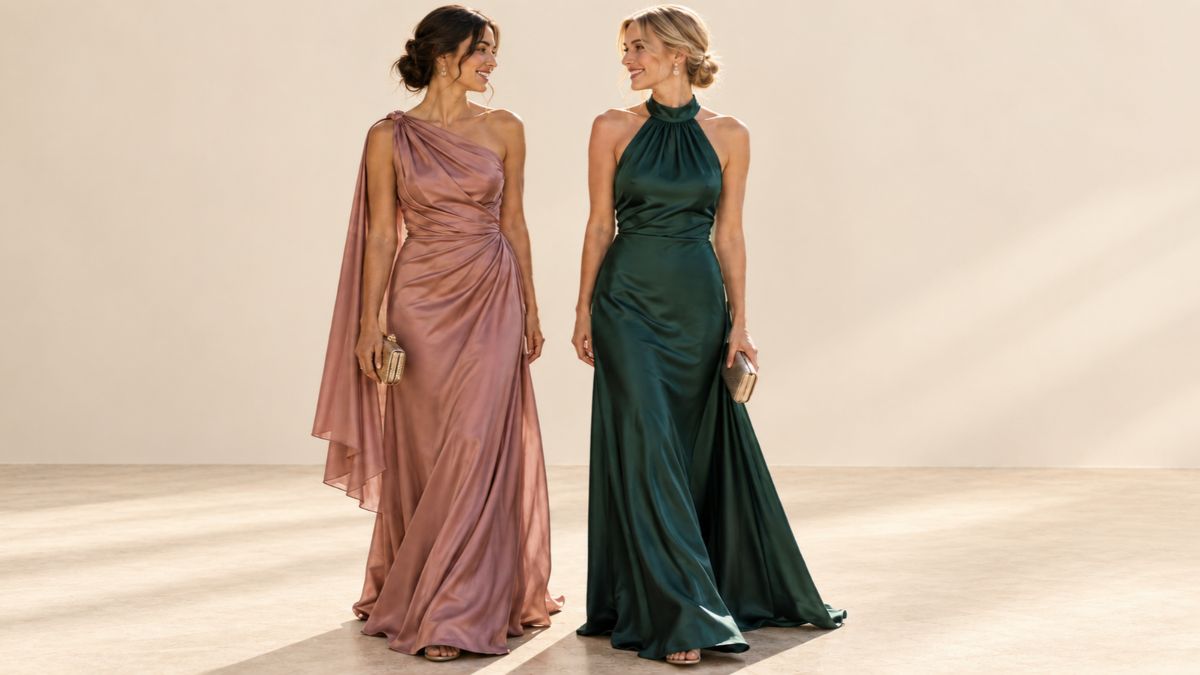
Shopping for wedding guest dresses for women can get easier once you focus on two practical factors: fabric and length. These details affect how a dress looks, feels, moves, and fits the formality of the event.
A lightweight midi dress can suit a warm outdoor ceremony, while a floor-length style in a dressier material can fit an evening celebration. Before buying, check the invitation, venue, season, dress code, and garment measurements. These details give you a stronger basis for comparing dresses than photos alone.
How Fabric and Length Affect Wedding Guest Dresses for Women
Fabric and length work together to influence the overall formality and practicality of a dress. A long cotton dress can look fairly casual, while a satin midi dress may appear considerably dressier.
When comparing women’s dresses for a wedding guest, look beyond hem length. Fabric composition, lining, silhouette, sleeves, neckline, and construction can all change how suitable a dress is for a specific event.

| Feature | What to Check | Why It Matters |
| Fabric | Weight, texture, composition | Influences comfort and formality |
| Length | Mini, knee, midi, tea, maxi | Helps match the venue and dress code |
| Lining | Full, partial, or unlined | Affects coverage and comfort |
| Silhouette | A-line, sheath, wrap, fit-and-flare | Changes fit and movement |
| Sleeves | Sleeveless, short, three-quarter, long | Affects coverage and temperature |
| Care instructions | Washing and dry-cleaning requirements | Helps you assess maintenance |
Lightweight Fabrics for Warm-Weather Weddings
Chiffon, linen, cotton, and lightweight crepe are among the materials you may encounter when shopping for spring and summer wedding attire. Their actual comfort can vary depending on fiber content, construction, and lining.
Check the product’s fabric composition rather than relying solely on the material named in its title. A lightweight outer layer paired with a heavier lining can feel quite different from an unlined design.
This becomes particularly useful when comparing dresses for beach wedding celebrations. Heat, humidity, wind, and sand can make heavy materials and trailing hems inconvenient.
Fabrics for Evening and Formal Events
Satin, velvet, lace, chiffon, and crepe commonly appear in formalwear collections. Each material has different characteristics, so the season and venue still matter.
For an evening wedding outfit, think about fabric weight and finish. Velvet may work well during cooler months, while satin provides a smoother surface with noticeable sheen.
Pay attention to retailer photos taken from several angles. Fabric can appear different depending on lighting, especially with satin and other reflective materials.
Choosing a Dress Length That Fits the Event
Length helps establish the appearance of a dress, yet there is no single hemline appropriate for every wedding.
Your height also changes where a hem falls. A midi dress shown at mid-calf on a tall model may reach closer to the ankle on someone shorter.
If garment-length measurements are available, compare them with your own measurements before ordering.
Mini and Knee-Length Dresses
Shorter dresses can work for casual, daytime, and certain cocktail weddings. The fabric and construction help determine how formal the finished outfit appears.
A structured knee-length dress in a dressier material may suit an event differently from a lightweight casual sundress at a similar length.
Coverage is another consideration. Think about how the hem sits when you are standing, walking, and seated rather than judging it from a front-facing product photo.
Midi Dresses
Midi dresses generally finish somewhere between the knee and ankle, although the exact placement depends on the garment and your height.
Their adaptable length makes them worth comparing for cocktail, semi-formal, and some formal events.
When shopping for a women’s dress for a wedding guest, check the model’s listed height, the size shown, and garment measurements when the retailer provides them.
Maxi and Floor-Length Dresses
Maxi and floor-length styles are commonly associated with dressier occasions. Floor-length evening gowns are especially common for formal and black-tie dress codes.
However, a long hem does not automatically make a dress formal. Fabric, construction, neckline, detailing, and silhouette still affect the overall appearance.
A casual jersey maxi dress and a structured evening gown can reach the same length while serving very different purposes.
Match the Fabric and Length to the Dress Code
Your invitation should be one of your main references before purchasing a dress. If the couple specifies a dress code, use it to narrow your options.
Casual Weddings
Casual weddings generally provide greater flexibility with fabric and length.
Knee-length, midi, and some maxi dresses may work depending on the venue and time of day. For an outdoor daytime ceremony, lighter materials can be practical in warm conditions.
Casual attire still needs to suit the occasion, so check the venue and any guidance supplied with the invitation.
Cocktail and Semi-Formal Weddings
Knee-length, tea-length, and midi dresses are common options to compare for cocktail and semi-formal events.
Fabric can change how these lengths appear. Lace, chiffon, crepe, and satin are among the materials frequently used in dressier designs.
Rather than automatically choosing the longest dress, compare the entire design with the stated dress code.
Formal and Black-Tie Weddings
Long gowns are strongly associated with black-tie attire. Dressy cocktail dresses may also be acceptable under some established black-tie etiquette guidance.
Formal events generally call for greater attention to material, construction, and styling. A polished cocktail or midi dress may appear dressier than a casual maxi despite being shorter.
If the couple provides specific attire instructions, follow those instructions first.
How the Venue Can Affect Your Dress Choice
Venue conditions can make some fabrics and lengths much easier to wear than others.
Outdoor ceremonies can involve grass, sand, heat, wind, or uneven surfaces. Indoor venues usually reduce concerns about hems touching the ground.
A beach wedding, for example, may make a manageable maxi, tea-length, or midi dress easier to wear than a gown with fabric trailing behind you.
For religious or cultural ceremonies, check for clothing expectations involving shoulders, necklines, arms, or head coverings. Information supplied by the couple or venue should take priority over general clothing advice.
Compare Measurements Instead of Relying on Size Labels
Clothing sizes can differ between retailers and individual designs. Your usual size is therefore a starting reference rather than a guarantee.
When comparing guest wedding dresses for women, check each retailer’s current size chart.
Useful measurements can include:
- Bust
- Waist
- Hips
- Garment length
- Sleeve length
- Inseam or slit placement
- Stretch information
Do not assume the same labeled size will have identical measurements across different brands.
Check How the Hem Will Fall on Your Height
Model photos provide useful visual context, though they cannot tell you exactly where a dress will fall on your body.
Check for the model’s height and size alongside the garment’s listed length. Your planned shoes can change the final appearance as well.
This matters most with floor-length dresses because even a small difference in shoe height can affect how close the hem sits to the ground.
Should Age Determine Your Dress Length?
Searching for wedding guest dresses for women over 50 may bring up collections marketed to a particular age group, but there is no universal wedding guest hemline determined by age.
Dress code, comfort, fit, venue, coverage preferences, and personal style are practical factors to use instead.
Knee-length, midi, tea-length, and maxi styles can all suit different wedding settings. Check how the dress fits and moves rather than selecting a length based primarily on an age category.
What Should You Check Before Buying a Wedding Guest Dress?
Is the Fabric Suitable for the Season?
Read the fabric composition and lining details when available. A dress that feels comfortable inside an air-conditioned venue may perform differently during an outdoor afternoon ceremony.
Does the Length Suit the Venue?
Think about sand, grass, stairs, seating, dancing, and your planned footwear. A floor-length dress may require alterations if the hem reaches beyond your preferred shoe height.
Can You Move Comfortably?
You could spend several hours sitting, walking, eating, and dancing. Check skirt width, sleeve movement, waist construction, slit placement, and fabric stretch.
Does the Dress Match the Stated Dress Code?
Use the invitation as your main reference. Specific instructions from the couple should take priority over broad fashion rules.
What Are the Return and Exchange Terms?
Online clothing fit can be difficult to predict. Check the retailer’s current return and exchange policy before ordering, especially when purchasing final-sale merchandise.
Comparing Wedding Guest Dresses Before Buying
If you have narrowed your choices to two or three dresses, compare practical details side by side.
| Buying Factor | Option A | Option B |
| Matches the dress code | Check | Check |
| Fabric suits the season | Check | Check |
| Length works for the venue | Check | Check |
| Measurements are available | Check | Check |
| Lining meets your preferences | Check | Check |
| Works with planned footwear | Check | Check |
| Care requirements are practical | Check | Check |
| Return terms are acceptable | Check | Check |
A structured comparison can help you assess each option based on the actual event rather than picking solely from styling photos.
Finding the Right Fabric and Length for Your Wedding Outfit
Fabric and length are useful filters when researching wedding attire. Start with the dress code, then account for the venue, season, ceremony setting, measurements, comfort, and footwear.
Lightweight materials and manageable hems can make sense for warm outdoor celebrations. Knee-length and midi dresses can fit many cocktail and semi-formal settings, while longer silhouettes and dressier materials may suit formal evening events.
Checking garment measurements, fabric composition, lining, care instructions, and return terms before purchasing gives you practical information for comparing your options.