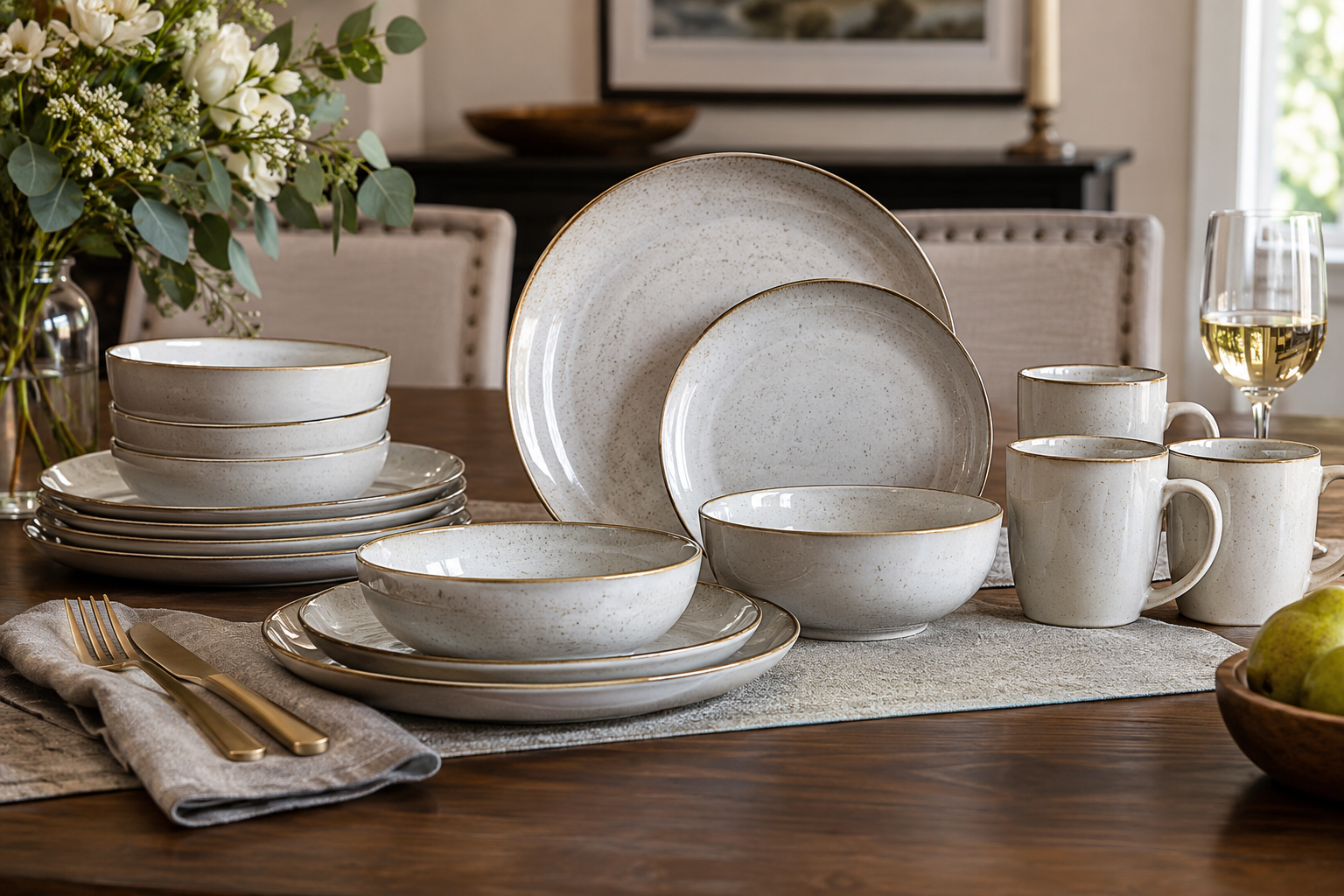
Choosing dinnerware sets can seem straightforward until you start comparing materials, piece counts, shapes, finishes, and care requirements. The right collection needs to suit your eating habits while fitting comfortably into your kitchen storage and dining style.
Some households need durable dishes that can handle breakfast, lunch, and dinner every day. Others may want a more polished collection for hosting family or friends. Looking closely at materials, sizes, included pieces, and maintenance requirements can help you narrow your options without paying for dishes you rarely use.
What Should You Look for in Dinnerware Sets?
Start with how you expect to use your dishes. A household serving casual meals every day may have different priorities from someone mainly shopping for dinnerware for entertaining.
Consider these factors before buying:

- Number of place settings included
- Types and sizes of plates and bowls
- Material and overall weight
- Microwave and dishwasher compatibility
- Stackability and available cabinet space
- Ease of replacing individual pieces
- Colors and patterns that complement your dining area
Checking these details makes it easier to compare collections beyond appearance alone.
Compare Dinnerware Materials Before You Buy
Material influences weight, durability, appearance, care, and sometimes price. Understanding the differences can help you decide which option works with your routine.
Porcelain dinnerware is widely used for both everyday dining and more formal table settings. Porcelain is made from ceramic materials fired at high temperatures, resulting in a hard, relatively nonporous surface. Designs range from simple white pieces to decorative patterns.
Stoneware dinnerware tends to have a substantial feel and is commonly available with matte, glossy, or reactive glazes. Its relaxed appearance can work particularly well in casual dining spaces. Because manufacturing methods vary, check the care instructions for the specific collection you are considering.
Bone china dinnerware is known for its thin, refined appearance while maintaining useful strength. It can suit shoppers looking for lighter dishes with an elegant finish. However, individual products may have different dishwasher or microwave recommendations, especially when metallic decoration is involved.
Other choices include earthenware, tempered glass, and melamine. Each offers different advantages, so product-specific care and usage instructions remain important.
How Many Pieces Do You Actually Need?
A larger box does not automatically provide better value. Look at exactly what comes inside.
A typical 16-piece dinnerware set may provide four place settings, with each setting containing four pieces. However, manufacturers can configure sets differently. One collection might include dinner plates, salad plates, bowls, and mugs, while another substitutes pasta bowls or other pieces.
Think about your household size and how often you entertain. Four place settings may work for a smaller household, while six, eight, or twelve settings may be more practical when you regularly serve guests.
Also consider which pieces you already own. If your cabinets are full of mugs, for example, a collection containing additional mugs may offer less practical value than one with extra bowls or plates.
Everyday Dinnerware Needs Practical Features
If dishes will be used several times a day, convenience deserves as much attention as design. Everyday dinnerware should fit your routine rather than creating additional work.
Dishwasher-safe pieces can simplify cleanup. Microwave-safe dishes may be useful when reheating leftovers, while stackable shapes can save cabinet space. Still, these features should always be confirmed through the manufacturer’s instructions rather than assumed from the material alone.
Weight matters too. Heavy plates can feel substantial on the table but may become cumbersome when you are carrying several at once. Lightweight dishes may be easier to handle, particularly for frequent use.
Before buying online, review the listed dimensions. Oversized dinner plates might not fit smaller cabinets or dishwashers comfortably.
Matching Dinnerware to Your Dining Style
Appearance matters because dishes become part of the overall table setting. You do not necessarily need elaborate patterns to create an attractive dining space.
Modern dinnerware sets often use clean silhouettes, neutral colors, understated patterns, or distinctive glazes. White, cream, gray, and other neutral shades can be particularly versatile because they work with different linens, serving dishes, and seasonal decorations.
Bolder colors and patterns can add personality but may be harder to coordinate if your table décor changes frequently. Consider how long you expect to use the collection before committing to a highly specific trend.
Shape also changes the overall look. Round plates provide a traditional appearance, while coupe edges and irregular handmade-style shapes can create a more contemporary setting.
Should You Buy a Complete Set or Individual Pieces?
Complete sets offer convenience because coordinating pieces arrive together. They can make sense when you are furnishing a kitchen, replacing mismatched dishes, or increasing the number of place settings you own.
Open-stock dinnerware provides another option. With open-stock collections, individual plates, bowls, and other items can be purchased separately. This flexibility can be helpful if a piece breaks or you later need additional place settings.
Before choosing a collection, check whether replacement pieces are available individually. This can matter if you intend to keep the same dishes for several years.
Check Bowl and Plate Sizes Carefully
Photos can make dishes appear larger or smaller than they really are. Product dimensions provide a clearer picture.
Dinner plates should comfortably accommodate the meals you usually prepare without being unnecessarily large. Salad or side plates can serve snacks, desserts, or smaller meals. Bowl shape deserves attention as well.
Deep bowls may suit cereal and soup, while wide shallow bowls can work well for pasta, grain bowls, curries, and composed dishes. If your household frequently serves several types of meals, versatile bowls may be particularly useful.
Check your cabinet depth and dishwasher rack dimensions when considering unusually large pieces.
Think About Maintenance and Long-Term Use
Care requirements can influence how practical a collection feels after the initial purchase. Decorative finishes, metallic rims, and certain handmade surfaces may require additional care.
Review the manufacturer’s guidance for:
- Dishwasher use
- Microwave use
- Oven use
- Maximum recommended temperatures
- Stacking and storage
- Handling decorative finishes
Glazed ceramic products can sometimes develop visible utensil marks. Depending on the surface and manufacturer’s recommendations, appropriate cleaning products may help remove them. Following product-specific instructions helps reduce the risk of damaging the finish.
How Can You Compare Value Between Sets?
Instead of comparing only the total price, look at what you receive and how much of it you will actually use.
Suppose one collection costs less but includes several pieces you do not need. Another may cost more while providing larger bowls, additional place settings, or access to individual replacement pieces. The second option could potentially make more sense for your household despite the higher initial price.
Consider the cost alongside:
- Number of usable place settings
- Material
- Included pieces
- Care requirements
- Replacement availability
- Expected frequency of use
- Warranty information, when applicable
This approach gives you a more practical basis for comparing products.
Questions to Ask Before Ordering
Is porcelain or stoneware better for everyday meals?
Neither material is automatically better for everyone. Porcelain can offer a smooth, versatile appearance, while stoneware often provides a heavier feel and casual aesthetic. Compare the specific product’s weight, construction, care instructions, and design.
Do you need separate dishes for guests?
Not necessarily. A versatile collection can work for weekday meals and casual gatherings. Neutral dishes are especially easy to dress up with table linens, glassware, serving pieces, and centerpieces.
How many place settings should you buy?
Choose based on your household plus the number of guests you commonly host. Buying a few extra settings may also provide backup pieces, but additional dishes require more storage.
Does dishwasher-safe mean microwave-safe?
No. These are separate product characteristics. Always check the manufacturer’s instructions for both.
Selecting Dinnerware Sets for Everyday Use and Entertaining
The best choice comes down to practical compatibility with your household. Think about what you eat, how often you entertain, how much cabinet space you have, and how much maintenance you are comfortable with.
Comparing materials, dimensions, included pieces, and care requirements can help you identify dishes that work for both everyday meals and special occasions. Instead of choosing primarily by appearance or piece count, focus on the features you are likely to use regularly.