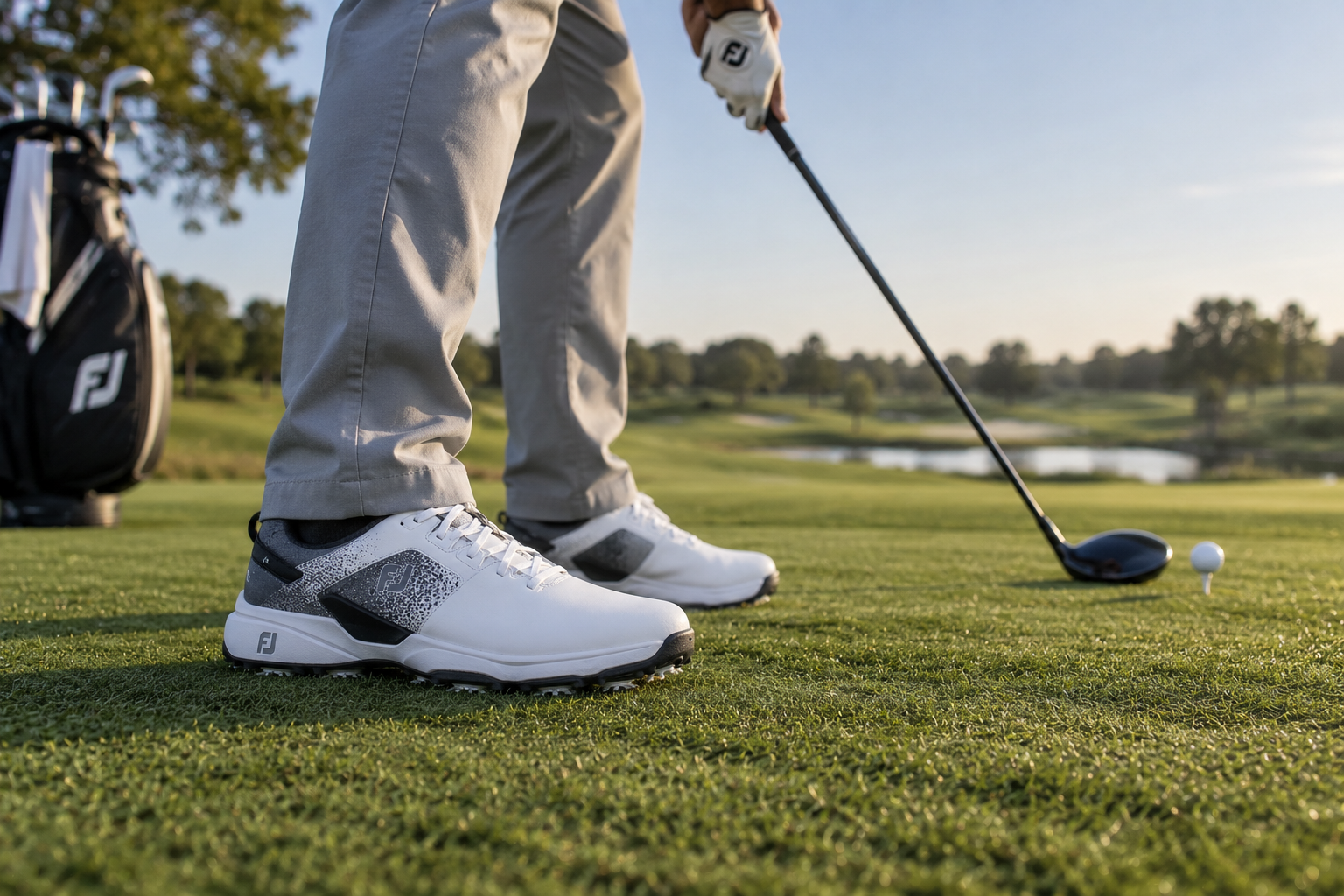
Finding golf footwear that fits properly can make long rounds much more comfortable. If standard-width shoes squeeze your forefoot or leave your toes feeling cramped, wide golf shoes may provide the extra room you need without forcing you to size up unnecessarily.
However, width is only one part of choosing golf footwear. You also need to consider cushioning, traction, waterproofing, course conditions, and how securely the heel stays in place. Understanding these features can help you compare your options and find shoes that suit both your feet and your playing habits.
What Should You Look for in Wide Golf Shoes?
The best wide golf shoes for your needs should give your forefoot enough space while keeping your heel secure. A shoe that is wide everywhere can feel unstable, while one that only provides additional room where your foot needs it may deliver a more controlled fit.
Before buying, pay attention to:

- Available width options
- Toe-box shape and depth
- Heel security
- Midsole cushioning
- Outsole traction
- Waterproof construction
- Upper flexibility
- Overall shoe weight
If possible, compare the manufacturer’s sizing chart rather than assuming every brand uses identical width measurements.
Why Golf Shoe Width Matters
Your feet naturally move and may swell somewhat during extended periods of walking. Golf can involve several hours on your feet, so shoes that feel slightly tight when you first put them on may become increasingly uncomfortable later in the round.
Golf shoes for wide feet are designed to provide additional space compared with standard-width models. Depending on the manufacturer, you may find wide, extra-wide, or brand-specific width classifications.
The goal is not simply to find the roomiest shoe available. Your footwear should allow natural toe movement while remaining secure enough to limit unnecessary sliding inside the shoe.
Check the Toe Box Before Buying
A roomy toe box can be particularly useful if your forefoot is wider than your heel. Your toes should have enough room to sit naturally without being pressed tightly together.
When testing wide toe box golf shoes, check whether you can move your toes comfortably. At the same time, walk around and make a few controlled golf-swing movements to see whether your foot shifts excessively.
Too much internal movement can reduce stability and create friction. Therefore, the ideal fit combines adequate forefoot space with a secure midfoot and heel.
Compare Spiked and Spikeless Designs
One of the biggest decisions when shopping for golf shoes is choosing between spiked and spikeless outsoles.
Spiked shoes use replaceable or fixed traction elements that can provide additional grip, particularly on wet grass, slopes, and softer ground. They may appeal to golfers who prioritize maximum course-specific traction.
Wide spikeless golf shoes, meanwhile, use molded rubber lugs or patterned outsoles instead of traditional spikes. They are often easier to wear between the course, clubhouse, and practice facility.
Your choice should depend on where you play most often. Golfers regularly dealing with damp or uneven courses may value aggressive traction, while players on relatively firm, dry courses may prefer the versatility of spikeless footwear.
Consider Waterproofing for Damp Conditions
Early tee times, wet fairways, and unexpected rain can quickly expose the limitations of shoes that offer little moisture protection.
If you frequently play in damp conditions, waterproof golf shoes may be worth considering. Look carefully at product specifications because water-resistant and waterproof are not necessarily interchangeable descriptions.
Waterproof membranes and sealed construction can help prevent external moisture from entering. However, designs vary in breathability, flexibility, and weight, so consider how those characteristics affect your comfort.
Also check whether the manufacturer provides a waterproof warranty and what conditions or time period it covers.
Look at Cushioning for Walking Rounds
Golfers who regularly walk 18 holes may place greater importance on cushioning than players who primarily use a cart.
A well-cushioned midsole can help make repeated walking more comfortable, but softer does not automatically mean better. Excessively soft cushioning may feel unstable to some golfers during the swing.
When comparing comfortable golf shoes, consider how the midsole feels when walking as well as when shifting your weight from side to side. A balanced design should provide cushioning without making your feet feel disconnected from the ground.
Removable insoles can also be useful if you prefer aftermarket inserts or orthotics, although compatibility varies by shoe.
Stability Matters During Your Swing
Golf footwear has to perform differently from ordinary walking shoes. During a swing, your feet experience rotational and lateral forces as your weight moves across your stance.
Golf shoes with good traction can help maintain contact with the ground during these movements. Look at the shape and placement of outsole lugs or spikes rather than focusing only on how aggressive the tread appears.
A wider outsole platform may also contribute to a planted feeling, although shoe geometry varies considerably between models.
Try making a few gentle practice swings when testing shoes. Your heel should remain secure, and your foot should not slide noticeably from side to side.
How Should Wide Golf Shoes Fit?
A properly fitted pair should feel comfortably secure rather than tight.
Your toes should have room to move, but your heel should not repeatedly lift as you walk. The midfoot should feel supported without uncomfortable pressure along the sides.
When evaluating the fit:
- Wear the same type of socks you normally use for golf.
- Try shoes later in the day if possible, when your feet may be slightly larger.
- Walk, turn, and make gentle swinging movements.
- Check for pressure around the forefoot and little toe.
- Confirm that the heel remains reasonably secure.
- Compare different widths rather than automatically choosing a larger shoe size.
Going up in length to compensate for insufficient width can leave excessive space in front of your toes and may contribute to unwanted movement.
Should You Choose Wide or Extra-Wide Golf Shoes?
That depends on your foot measurements and the manufacturer’s sizing system.
If regular shoes consistently feel tight across your forefoot, a wide option may be appropriate. If wide models still create pressure along the sides, an extra-wide option could be worth testing.
Width labels are not perfectly standardized across every golf shoe manufacturer. Consequently, your preferred size in one brand may fit differently in another.
Measuring both feet can provide a useful starting point, especially because one foot can be slightly larger than the other.
What Features Are Worth Paying More For?
Higher-priced golf shoes often include premium materials, specialized cushioning, sophisticated outsole designs, or waterproof technologies. That does not mean every golfer needs the most expensive model.
Consider paying more when a feature addresses something you genuinely need.
For example, waterproof construction may offer practical value if you frequently play wet courses. More durable traction systems could matter if you play several rounds each week. Meanwhile, occasional golfers playing mostly in dry conditions may prioritize fit and basic comfort instead.
Rather than shopping based on price alone, compare how each feature relates to your typical rounds.
How to Compare Wide Golf Shoes Before Buying
A simple comparison can make shopping easier.
| Feature | What to Check |
|---|---|
| Width | Wide and extra-wide availability |
| Toe Box | Enough room without excessive movement |
| Heel | Secure with minimal lifting |
| Cushioning | Comfortable but reasonably stable |
| Traction | Appropriate for your usual course conditions |
| Waterproofing | Waterproof rating or warranty information |
| Upper | Flexible enough for comfortable movement |
| Insoles | Removable if you use custom inserts |
| Weight | Comfortable for walking several hours |
| Price | Features that provide practical value for your needs |
If shopping online, review the retailer’s return and exchange policy before ordering. Being able to compare two widths or sizes at home can make it easier to identify the better fit.
Frequently Asked Questions
Are wide golf shoes better for wide feet?
They can be. A dedicated wide size generally provides additional horizontal room compared with a standard-width version of the same shoe. The actual fit still depends on the shoe’s shape and your individual foot dimensions.
Should you size up if golf shoes feel narrow?
Not automatically. Increasing the shoe length may create unnecessary space around the heel and toes. Trying the same size in a wider fitting is usually a more logical comparison when width is the main problem.
Are spikeless golf shoes suitable for walking?
Many spikeless models are designed with walking comfort and versatility in mind. However, cushioning, weight, flexibility, and fit vary between models, so the outsole type alone does not determine comfort.
Do you need waterproof golf shoes?
Not everyone does. Waterproof construction becomes more useful if you regularly play early in the morning, encounter wet grass, or golf in rainy climates. Golfers who mainly play in warm, dry conditions may prioritize ventilation instead.
How much room should golf shoes have?
Your toes should have enough space to move naturally without your entire foot sliding inside the shoe. A secure heel and midfoot are particularly important because golf involves rotational movement during the swing.
Finding the Right Wide Golf Shoes for Your Game
Choosing golf footwear comes down to balancing fit, traction, cushioning, weather protection, and your preferred style of play. Start by determining the width your feet actually need, then compare features that match the conditions you encounter most often.
When possible, try several models rather than relying solely on the width printed on the box. The right pair should provide enough forefoot room while keeping your heel and midfoot secure, helping you stay comfortable from the first tee through the final hole.