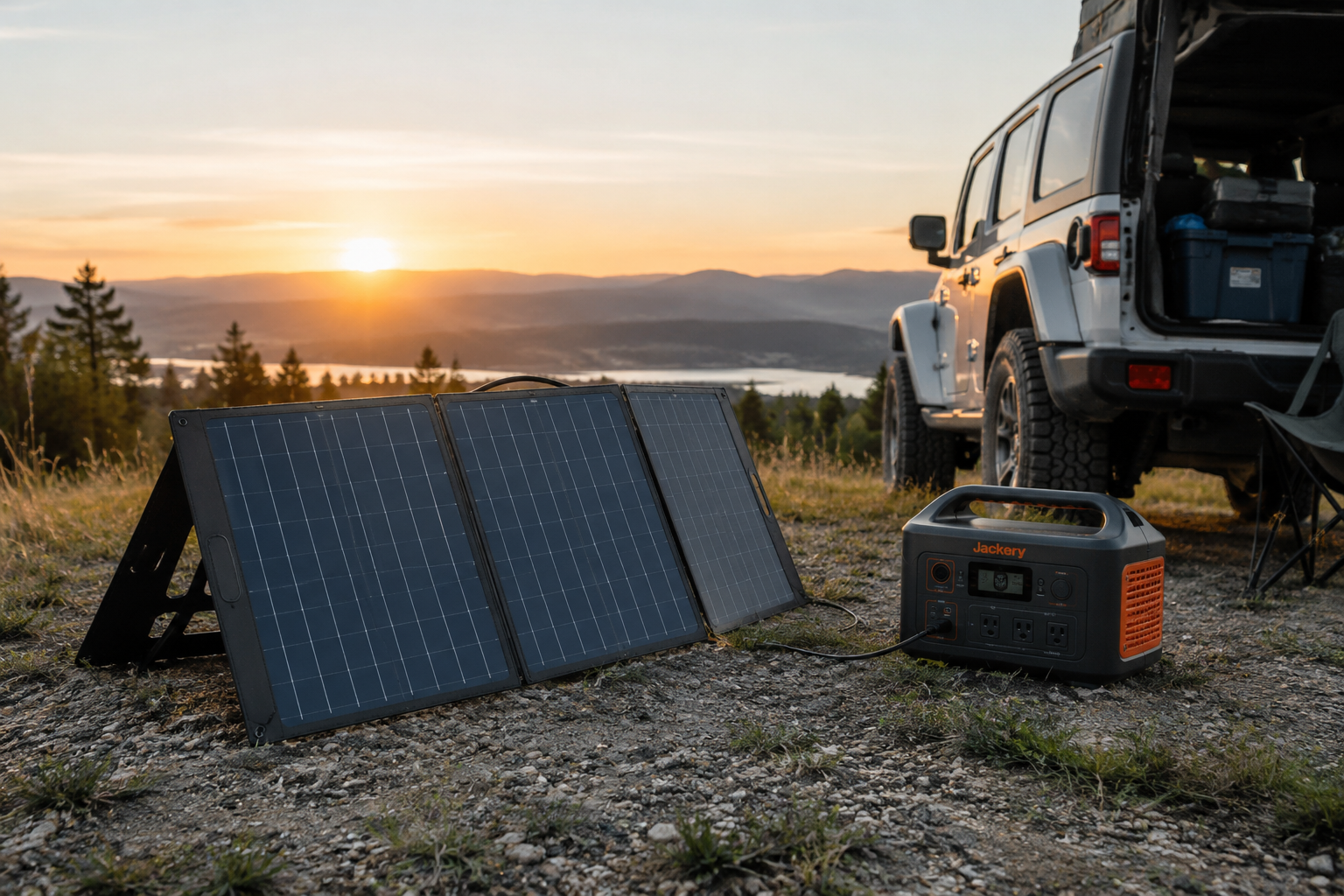
Having access to electricity away from a wall outlet can make camping, road trips, outdoor work, and emergency preparation much easier. Portable solar panels give you a flexible way to collect solar energy and use it with compatible power equipment.
However, panel size, output, portability, connectors, and weather resistance can vary considerably. Before choosing a model, it helps to understand how these features affect real-world performance. Comparing the right specifications can help you find a setup that fits your equipment, available space, and typical power needs.
Portable Solar Panels: What Should You Look for Before Buying?
The best panel for your situation depends on where you plan to use it and what you need to power. A lightweight panel might make sense for occasional camping, while a larger foldable solar panel may be more practical when you need greater charging capacity.
Start by considering these factors:

- Rated power output in watts
- Folded and unfolded dimensions
- Weight and carrying design
- Connector type and compatibility
- Weather and water resistance
- Built-in stands or mounting options
- Warranty coverage
Higher wattage can provide more charging potential, but it often means a larger and heavier panel. Finding a reasonable balance between output and portability is usually more useful than choosing based on wattage alone.
How Do Portable Solar Panels Work?
Solar panels contain photovoltaic cells that convert sunlight into direct-current electricity. That electricity can then be directed to compatible equipment, such as a portable power station, through the appropriate cable and input connection.
Actual output can vary from the panel’s advertised rating. Factors such as cloud cover, shade, temperature, panel orientation, season, and time of day can influence how much electricity reaches your equipment.
For example, a panel rated at 200 watts should not be expected to produce exactly 200 watts throughout the day. Rated wattage is useful for comparing models, but real-world conditions should also be considered when estimating charging times.
How Much Solar Panel Wattage Do You Need?
Your ideal wattage depends largely on what you want to charge and how quickly you want to recharge it.
Smaller panels may be suitable for modest energy requirements. Larger panels can make more sense when charging higher-capacity batteries or supporting several devices.
A simple comparison looks like this:
| Typical Panel Rating | Potential Use | Portability |
|---|---|---|
| 50–100W | Small devices and compact battery systems | High |
| 100–200W | Camping equipment and medium-capacity power stations | Moderate to high |
| 200–400W | Larger power stations and higher daily energy needs | Moderate |
| 400W+ | High-capacity portable energy setups | Lower |
These ranges are general guidelines rather than guaranteed performance levels. Your equipment’s input limits and actual sunlight conditions can significantly affect charging.
Check Compatibility With Your Equipment
Compatibility deserves close attention before you buy. A panel can provide sufficient wattage and still be unsuitable if its voltage, current, connector, or polarity does not match your charging equipment.
When pairing solar panels for camping with a battery system, check the manufacturer’s specifications for:
- Supported solar input voltage
- Maximum input current
- Maximum solar wattage
- Connector requirements
- Recommended panel configuration
You should also confirm whether adapters are included or need to be purchased separately. Checking these details before ordering can prevent compatibility problems later.
Consider Portability and Storage
A portable panel should be reasonably easy to transport, set up, and store. Weight becomes particularly important if you carry your equipment between campsites instead of transporting everything by vehicle.
Look beyond the panel’s unfolded dimensions. Check its folded size, total weight, handle design, protective case, and setup method.
A panel with built-in kickstands can make positioning easier because you can adjust its angle toward the sun. Some designs also include carrying handles and cable-storage compartments, which may help keep your equipment organized.
Compare Solar Cell Efficiency Carefully
You may encounter efficiency percentages while comparing products. Solar panel efficiency describes how effectively a panel converts incoming sunlight into usable electrical energy under specified testing conditions.
Higher efficiency can be useful when available surface area is limited because more output may be generated from a smaller panel area. However, efficiency should not be evaluated by itself.
Overall wattage, dimensions, durability, price, weight, and compatibility may matter just as much. A highly efficient panel that does not match your power system or portability requirements may still be a poor fit.
Pay Attention to Weather Resistance
Portable panels are frequently used outside, making durability an important consideration. Manufacturers may provide an IP rating that indicates a product’s tested resistance to dust and water.
Do not assume that every outdoor solar panel is waterproof. Some products can tolerate rain or splashes, while connectors, controllers, or other components may require additional protection.
Check the manufacturer’s instructions before leaving equipment exposed to changing weather conditions.
Think About Your Typical Use Case
Your buying priorities may change depending on where you expect to use the panels.
Camping
For camping, portability and setup speed can matter as much as output. A compact panel that folds for transportation may be easier to manage around a campsite.
RV and Van Travel
For vehicle-based trips, you may have room for a larger solar charging system. Higher-output panels can be practical when paired with a compatible battery system, especially when you regularly charge electronics or small appliances.
Emergency Preparedness
Portable panels can form part of a backup-power setup for outages. They may help recharge compatible battery storage when sunlight is available. However, solar output varies with environmental conditions, so it is sensible to consider solar as one component of a broader emergency plan.
Outdoor Work
If you work away from electrical outlets, portable panels may help recharge batteries for compatible electronics and equipment. Durability, cable length, setup flexibility, and charging speed can become particularly important.
How Should You Compare Prices?
Price comparisons are more useful when you look at the complete package instead of the panel alone.
Consider what comes with each product. One model might include a protective case, kickstands, cables, and adapters, while another requires some of those accessories separately.
You can also compare cost per rated watt by dividing the purchase price by the panel’s advertised wattage. This gives you one straightforward way to compare differently sized models.
However, the cheapest cost per watt does not automatically represent the best value. Warranty coverage, construction quality, portability, included accessories, and compatibility should remain part of your decision.
Can Portable Panels Charge a Solar Generator?
Many panels can work with a solar generator for camping, although compatibility depends on the equipment.
The term solar generator commonly describes a portable power station paired with solar panels. The power station stores electricity in its internal battery and provides outputs for compatible devices.
Before combining products from different manufacturers, compare the power station’s solar input requirements against the panel’s electrical specifications. Using appropriate connectors alone does not necessarily mean two products are electrically compatible.
Should You Buy One Large Panel or Multiple Smaller Panels?
There are advantages to both approaches.
One large panel can simplify setup and reduce the number of individual pieces you need to transport. Multiple smaller panels may provide greater flexibility because they can sometimes be arranged around obstacles or packed separately.
If your equipment supports multiple panels, check whether they should be connected in series, parallel, or another manufacturer-approved configuration. Different configurations affect voltage and current, so you should follow the specifications provided for your equipment.
Common Mistakes to Avoid When Shopping
A little research can help you avoid buying equipment that does not suit your needs. Common mistakes include:
- Choosing based only on advertised wattage
- Ignoring voltage and current requirements
- Assuming every connector is universally compatible
- Expecting rated output throughout the entire day
- Overlooking folded dimensions and weight
- Assuming outdoor equipment is fully waterproof
- Forgetting to check included cables and adapters
- Buying more capacity than you realistically need
Comparing specifications alongside your expected use makes it easier to narrow down suitable options.
Frequently Asked Questions
Are portable solar panels worth buying?
They can be useful if you regularly need off-grid charging for compatible equipment. Their value depends on how often you use them, local sunlight conditions, and the equipment you intend to charge.
How long do portable solar panels take to charge a battery?
There is no universal charging time. Battery capacity, panel output, solar input limits, weather, shading, and charging losses can all affect the result.
Do portable panels work on cloudy days?
Solar panels can still generate electricity under some cloudy conditions, but output may be substantially lower than under strong direct sunlight.
Can you leave portable panels outside?
That depends on the product’s construction and environmental rating. Check the manufacturer’s guidance regarding rain, moisture, temperature, and long-term outdoor exposure.
Is higher wattage always better?
Not necessarily. More wattage may improve charging potential, but larger panels can be heavier, bulkier, and more expensive. Your power station may also have a maximum solar input limit.
Choosing Portable Solar Panels That Match Your Lifestyle
The right solar setup comes down to balancing power, portability, compatibility, durability, and price. Instead of focusing on one specification, consider how the complete system will work during your typical trips or power needs.
Check your equipment’s input requirements first, then compare panel wattage, dimensions, weight, connectors, weather resistance, included accessories, and warranty terms. That approach can help you choose a practical setup without paying for features or capacity you are unlikely to use.