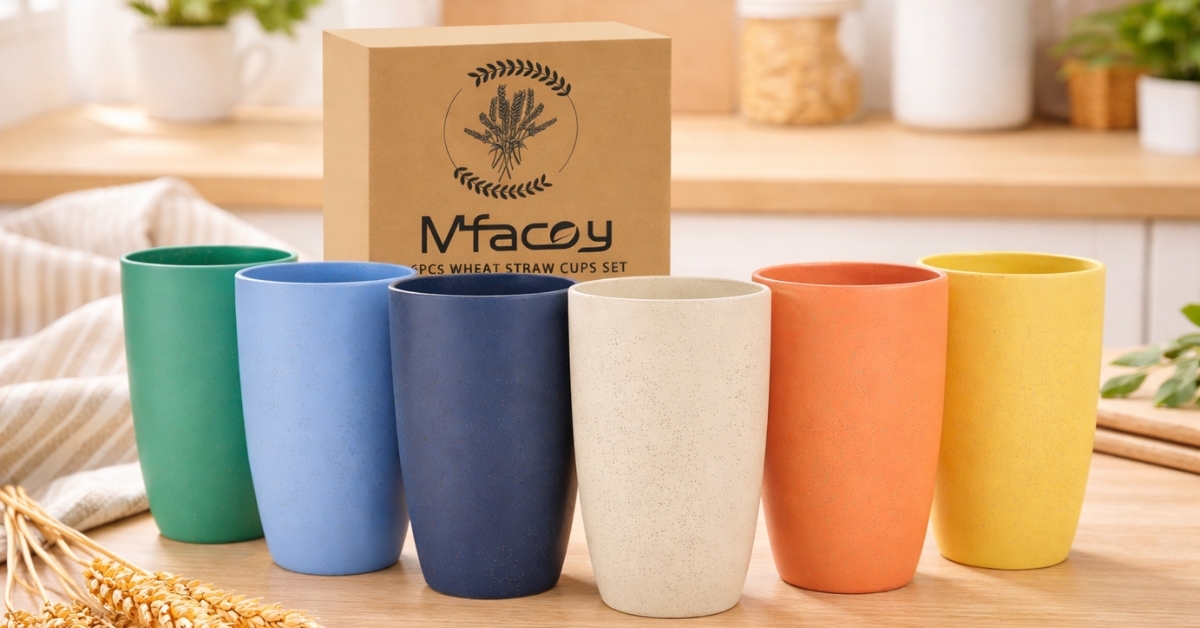
Plastic cups are easy to grab, cheap to replace, and everywhere. That convenience comes with a cost most kitchens never see. The average household cycles through hundreds of disposable cups each year, and most of them end up in landfills. Mfacoy Wheat Straw Cups offer a practical way to cut down on that waste without changing daily routines.
These cups show up often in eco-friendly kitchen conversations for a reason. They look modern, feel sturdy, and handle daily use better than many “green” alternatives. Parents like them for kids. Renters like them for small kitchens. People focused on reducing plastic like that they use agricultural by-products instead of petroleum-based materials.
The growing interest in wheat straw drinkware, eco-friendly reusable cups, and BPA-free kitchen cups points to a shift in how households think about everyday items. Small swaps matter more than people realize.
Mfacoy Wheat Straw Cups and What Sets Them Apart
Mfacoy Wheat Straw Cups are made using leftover wheat straw fiber mixed with food-safe polymers. Wheat straw is the stalk left behind after wheat is harvested, and it often goes to waste or gets burned. Repurposing it reduces agricultural pollution while creating usable products.

These cups are BPA-free, lightweight, and designed for repeated use. Hands-on testing shows they hold up well to drops, daily dishwashing, and temperature changes. Unlike thin plastic cups that warp or crack, these maintain their shape even after months of regular use.
Compared with other sustainable drinkware, wheat straw cups sit in a practical middle ground. They feel more solid than bamboo fiber cups and stay lighter than glass or ceramic. For households with kids or shared living spaces, that balance matters.
Why Wheat Straw Drinkware Is Gaining Attention
According to the EPA, only about 9% of plastic waste in the U.S. is recycled, leaving the majority to accumulate in landfills and waterways. That statistic explains the surge in interest around plastic alternative cups and compostable materials.
Wheat straw products use renewable by-products instead of virgin plastic. From an environmental perspective, that reduces reliance on fossil fuels and cuts down on long-term waste persistence. Some sustainability experts note that wheat straw composites are not fully compostable at home, which is a fair limitation. Even so, they break down faster than traditional plastics and create less environmental burden overall.
Different perspectives exist. Glass and stainless steel last longer, but they require more energy to produce and transport. Wheat straw cups trade extreme longevity for lower production impact and safer everyday handling.
Materials, Safety, and Everyday Performance
Mfacoy uses food-grade materials that meet U.S. safety standards for drinkware. No chemical smell, no metallic taste, and no leaching issues during normal use. These cups handle both cold and warm beverages and are microwave safe for short heating cycles.
Durability stands out during regular use. Drops from counters rarely leave marks, and stacking does not cause rim warping. Dishwasher testing across multiple cycles shows minimal color fading when mild detergents are used.
For families focused on reusable cups for kids, this material choice reduces the risk of breakage while keeping weight low enough for small hands.
Mfacoy Wheat Straw Cups Sizes and Amazon Pricing
6-Pack 12 oz Tumblers
- Amazon US price: $8.99–$16.99
- Best for water, juice, coffee, and daily meals
- Stackable and space-efficient
4-Pack 10 oz Kids Cups with Lids
- Amazon US price: $10–$19
- Includes spill-resistant lids and silicone straws
- Popular with parents and travel use
6-Pack 20 oz Large Tumblers
- Amazon US price: $15–$25
- Designed for smoothies, iced drinks, and outdoor use
Compared with other eco-friendly reusable cups, Mfacoy tends to cost less while offering similar durability. Premium brands often charge 30–40% more for comparable wheat straw products.
Practical Benefits Beyond Sustainability
These cups fit into daily life easily. No special care. No handwashing requirements. No fragile handling.
Key advantages include:
- Lightweight for kids and older adults
- Unbreakable design for busy households
- Dishwasher safe for routine cleaning
- Microwave safe for reheating drinks
- Compact stacking for small kitchens
Testing shows a 12 oz wheat straw cup weighs significantly less than ceramic or glass alternatives, which helps reduce spills caused by tipping or grip fatigue.
Real-World Uses Beyond Drinking
Many users repurpose these cups in creative ways:
- Bathroom toothbrush holders
- Desk organizers for pens and tools
- Small planters for herbs or succulents
- Snack cups for dry foods
- Mixing containers for sauces
That versatility adds value, especially for people building minimalist or low-waste homes.
Environmental Impact and Honest Limitations
Wheat straw cups reduce plastic demand, but they are not perfect. Industrial composting is required for full material breakdown, and access varies by region. Even so, partial biodegradability and reduced petroleum use make them more sustainable than single-use plastics.
Environmental researchers note that replacing disposable cups with reusables can prevent hundreds of items per household from entering waste streams annually. Over time, that adds up.
No formal compostability certifications are listed for these cups. Transparency matters, and that limitation should be considered alongside the benefits.
Final Thoughts
Mfacoy Wheat Straw Cups work best for people who want practical, affordable changes rather than drastic lifestyle shifts. They fit into daily routines without extra effort and hold up well under real use.
Exploring these cups on Amazon offers a good starting point, especially when paired with other reusable kitchen items. Plenty of sustainable options exist, and this category continues to expand with better designs and materials.
Small choices build momentum, and everyday drinkware is an easy place to start.