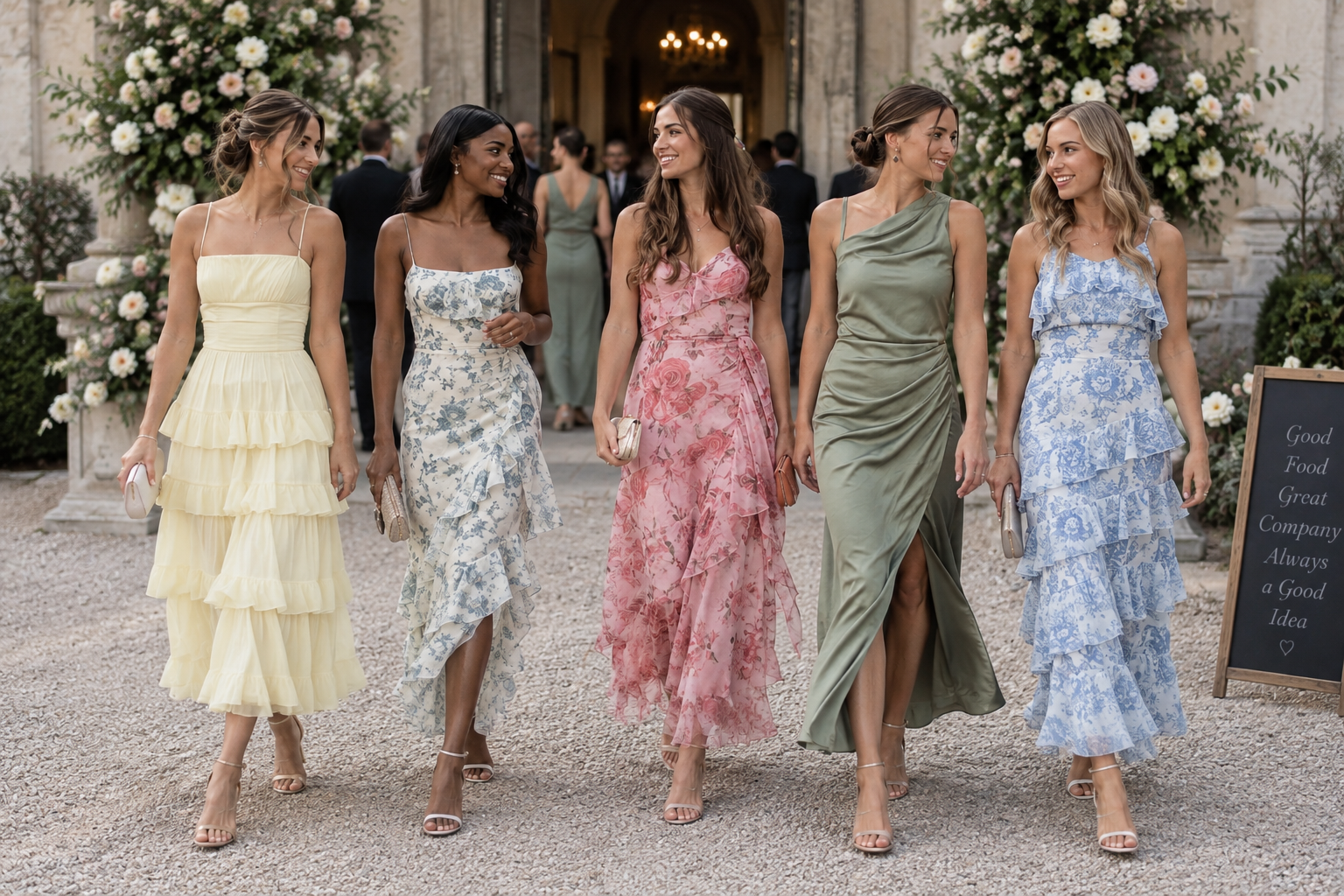
Finding wedding guest dresses that look polished while still feeling comfortable can take more thought than expected. You need to consider the dress code, venue, weather, ceremony time, and how long you may be wearing the outfit. The right choice should suit the celebration without competing with the couple or leaving you uncomfortable halfway through the reception.
From formal evening celebrations to relaxed outdoor ceremonies, understanding fabrics, lengths, silhouettes, and dress codes can make comparing your options much easier.
How to Choose Wedding Guest Dresses for Different Dress Codes
Before comparing colors or silhouettes, check the invitation and wedding website for a stated dress code. Terms such as black tie, formal, cocktail, semi-formal, and casual provide useful direction.
When the instructions are less specific, consider the venue and time of day. An evening ballroom reception usually calls for a different outfit than an afternoon garden ceremony.

Black-Tie Weddings
Black-tie celebrations generally call for elevated evening attire. A floor-length gown is a traditional option, although sophisticated formal dresses may also work depending on the event.
Look for refined fabrics and details that complement the occasion. Satin, chiffon, velvet, crepe, and similar materials can create a more formal appearance.
Formal Weddings
Formal dress codes provide slightly more flexibility. Long gowns, elegant midi dresses, and sophisticated cocktail-length options can all be worth considering.
If you’re comparing formal wedding guest dresses, pay attention to more than length. Fabric, tailoring, neckline, embellishment, and overall styling can influence how formal a dress appears.
Cocktail Weddings
Cocktail attire generally falls between formal eveningwear and casual clothing. Knee-length and midi dresses are common choices, while dressier jumpsuits may also be appropriate.
A polished cocktail dress for wedding celebrations can work particularly well when you want something that may be useful for other parties and special occasions later.
Semi-Formal Weddings
Semi-formal celebrations allow you to dress elegantly without automatically needing a full-length gown. Midi and knee-length dresses are practical options.
Instead of relying heavily on sequins or elaborate embellishment, you might choose an interesting neckline, flattering draping, textured fabric, or subtle print.
Casual Weddings
Casual doesn’t necessarily mean everyday clothing. A backyard, beach, or daytime wedding may have a relaxed atmosphere, but your outfit should still acknowledge that you’re attending a special occasion.
Flowing dresses, tasteful prints, comfortable fabrics, and uncomplicated silhouettes can fit these settings well.
Consider the Wedding Venue Before Buying
The venue can provide valuable clues about what you’ll actually need from your outfit.
For a hotel or ballroom wedding, structured or flowing evening dresses may fit the surroundings. Outdoor celebrations introduce additional considerations such as grass, sand, uneven surfaces, heat, and changing temperatures.
For example, extremely long hems may be inconvenient at a garden wedding. At a beach ceremony, lightweight fabric and shoes that can handle sand may make the day more comfortable.
When browsing summer wedding guest dresses, breathable construction and lighter fabrics can be particularly useful for warm outdoor celebrations. However, bringing a light layer may still make sense if the reception moves into an air-conditioned venue.
Choose a Dress Length That Fits the Occasion
Dress length can quickly change the overall impression of an outfit.
Maxi dresses can work for formal, evening, destination, and outdoor weddings depending on their fabric and design. They offer plenty of coverage and can range from relaxed to highly sophisticated.
Midi dresses are especially versatile. Falling between the knee and ankle, they can transition across cocktail, semi-formal, and some formal events.
Knee-length dresses can work well for daytime, cocktail, or less formal celebrations when the design remains polished.
For an event that calls for elevated attire, elegant wedding guest dresses with thoughtful tailoring and occasion-appropriate fabrics may be more useful than choosing based on hem length alone.
Think About Season and Weather
Seasonality affects both appearance and comfort.
Spring
Spring weddings often suit lighter fabrics, floral patterns, pastel shades, and brighter colors. Since temperatures can fluctuate, consider carrying a cardigan, wrap, or lightweight jacket.
Summer
Warm-weather celebrations may call for chiffon, linen blends, lightweight cotton, or other breathable materials. Outdoor venues also make practical considerations such as sun exposure and humidity more important.
Autumn
Deeper greens, burgundy, rust, navy, plum, and other rich shades can complement autumn celebrations. Midi and maxi silhouettes are particularly easy to layer when temperatures begin dropping.
Winter
Winter weddings provide opportunities for heavier fabrics and richer textures. Velvet and substantial crepe can work well, while long sleeves and full-length styles may provide additional coverage.
Compare Fabric as Carefully as Style
A dress can look great online yet feel completely different after several hours of sitting, standing, eating, and dancing. Fabric deserves attention before you buy.
Chiffon is lightweight and flowing, making it popular for warmer weather and romantic silhouettes. Satin has a smooth, dressier appearance but can show wrinkles or marks depending on its construction. Crepe often provides fluid draping with a slightly textured finish.
Lace can add visual detail, while velvet is better suited to cooler weather because of its heavier feel.
Find a Silhouette That Works for Your Preferences
There isn’t one silhouette that every wedding guest needs to wear. The better choice is the shape that fits comfortably and gives you the amount of coverage and movement you want.
Popular options include A-line, wrap, sheath, slip, fit-and-flare, empire-waist, and column dresses.
An A-line design offers room through the skirt, while wrap styles often allow some flexibility around the waist. Slip dresses create a streamlined appearance and can be layered with jackets or wraps.
If you’re looking specifically for midi wedding guest dresses, you’ll find this length across many silhouettes, making it easier to compare fitted, flowing, sleeved, and sleeveless options without changing the overall level of formality dramatically.
Which Colors Are Appropriate for a Wedding Guest?
Wedding dress etiquette varies between cultures and individual celebrations, so any instructions from the couple should take priority.
In many Western wedding settings, guests traditionally avoid outfits that could be mistaken for bridal attire, particularly predominantly white or ivory dresses. If the couple has specifically requested a color palette, however, follow their guidance.
You can consider jewel tones, pastels, earthy shades, florals, prints, or darker neutrals depending on the season and dress code.
When uncertain, choosing something clearly distinct from traditional bridal clothing is usually the simpler approach.
What Should You Check When Shopping Online?
Online shopping gives you access to far more options, but product photographs don’t tell the entire story.
Before ordering, check:
- The retailer’s size chart and garment measurements
- Fabric composition and lining
- Customer photographs when available
- Reviews discussing fit and sizing
- Dress length and model height
- Washing or dry-cleaning instructions
- Shipping estimates
- Return and exchange policies
- Any final-sale restrictions
For affordable wedding guest dresses, price shouldn’t be the only comparison point. A lower-priced dress that requires significant alterations or cannot be returned may ultimately offer less value than a slightly more expensive option with better sizing information and flexible returns.
Should You Buy a Trendy or Versatile Dress?
That depends on how you expect to use the dress after the wedding.
A distinctive trend-driven design may make sense when you want something memorable for a particular event. A simpler silhouette in a versatile color may provide more opportunities for repeat wear.
You can also change the appearance of a versatile dress with different shoes, jewelry, handbags, jackets, or wraps.
If you’re attending several weddings in one year, versatility becomes particularly useful. One well-chosen midi or maxi dress may work across different celebrations with a few styling adjustments.
How Far in Advance Should You Shop?
Starting early gives you time to compare sizes, order alternatives, make returns, and arrange alterations if necessary.
Shopping particularly early can help when the wedding involves travel or a specific dress code. Leaving everything until the final days limits your choices and makes shipping delays more consequential.
Try the complete outfit before the event rather than testing only the dress. Wear your planned shoes and undergarments, sit down, walk around, and check how comfortably you can move.
Balance Style, Comfort, and Practicality
The best dress on a product page isn’t necessarily the best dress for your particular event. Think about what you’ll actually be doing throughout the celebration.
You may spend hours sitting through a ceremony, walking between venues, eating dinner, taking photographs, and dancing. Features such as adjustable straps, secure necklines, functional closures, breathable lining, and comfortable waist construction can matter considerably after several hours.
Shoes deserve the same consideration. If the wedding includes lawns, cobblestones, beaches, or significant walking, choose footwear suited to the terrain.
Final Thoughts: Finding a Dress You’ll Enjoy Wearing
Choosing wedding guest dresses becomes easier when you narrow the search according to dress code, venue, season, fabric, fit, and budget rather than browsing hundreds of styles without a plan.
Start with the couple’s instructions, then compare dresses based on how well they suit the actual event. Look closely at materials, measurements, return policies, and practical details before purchasing. A thoughtful choice can give you an outfit that feels appropriate for the celebration while remaining comfortable from the ceremony through the reception.