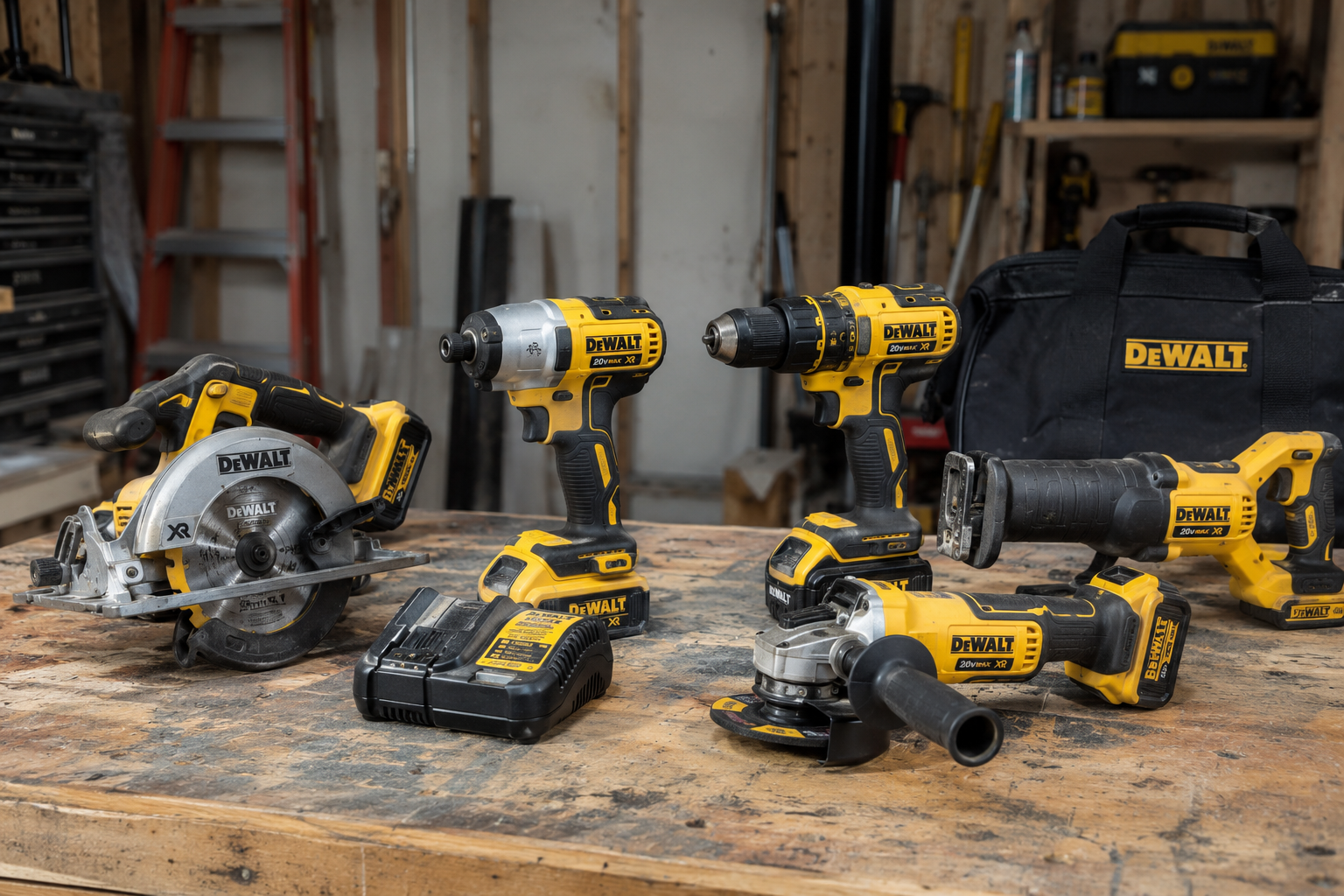
Cordless power tools can make home repairs, DIY projects, construction tasks, and workshop jobs more convenient by removing the need for a nearby electrical outlet. Powered by rechargeable batteries, these tools give you greater freedom to move around a workspace and can be especially useful outdoors or in areas where power access is limited.
Modern cordless tools cover everything from drilling and fastening to cutting, sanding, grinding, and demolition. However, choosing the right equipment involves more than picking the tool with the highest voltage. Battery compatibility, motor design, ergonomics, runtime, and the type of work you plan to complete all deserve consideration.
What Are Cordless Power Tools?
Cordless power tools are portable electric tools that operate using rechargeable battery packs instead of relying continuously on a wall outlet. Lithium-ion batteries are widely used in current tool systems because they combine rechargeable operation with relatively compact designs.
The category includes drills, impact drivers, circular saws, reciprocating saws, angle grinders, sanders, nailers, oscillating multi-tools, and other equipment.

One major advantage of battery powered tools is mobility. You can carry them between rooms, use them in a garden or garage, or work at a jobsite without managing an extension cord for every task.
How Cordless Power Tools Make Projects More Flexible
A cord can become inconvenient when you’re moving around a large project. Cordless equipment allows you to change positions without repeatedly unplugging and reconnecting your tool.
This flexibility can be particularly helpful for jobs such as:
- assembling furniture
- installing shelves and cabinets
- drilling pilot holes
- driving screws and fasteners
- cutting lumber and sheet materials
- completing garden structures
- handling basic vehicle or workshop projects
- performing repairs in areas without convenient outlets
Cordless equipment can also reduce the amount of cable management required around a workspace. However, safe operating procedures are still important, including using appropriate personal protective equipment and following the manufacturer’s instructions.
Cordless Drill and Impact Driver: Understanding the Difference
A cordless drill is one of the most versatile tools for a home workshop. Depending on its design and accessories, it can drill holes and drive screws into materials such as wood, metal, and masonry.
An impact driver serves a somewhat different purpose. It delivers rotational impacts that can make driving longer screws and other suitable fasteners easier.
For general household work, a drill may cover many common jobs. People who regularly build furniture, decking, framing, or other projects involving numerous fasteners may find value in having both tools.
Why Battery Platform Compatibility Matters
Battery compatibility is an important consideration when building a cordless tool collection.
Manufacturers commonly develop tool families around specific battery platforms. A compatible battery may operate several tools within the same system, although compatibility depends on the manufacturer, product line, battery voltage, and individual tool.
Staying within a compatible platform can reduce the number of different chargers and power tool batteries you need to manage.
Before purchasing another tool, check the manufacturer’s compatibility information rather than assuming that batteries with similar voltage ratings are interchangeable.
Understanding Battery Voltage and Capacity
Two specifications frequently appear when comparing cordless equipment: voltage and amp-hours.
Voltage relates to the battery system’s electrical potential and is one factor affecting tool performance. Higher voltage alone does not automatically mean that one tool will be better for your particular project.
Amp-hours, commonly abbreviated as Ah, indicate battery capacity. Within compatible systems and comparable conditions, a higher-capacity battery can generally provide longer operation, although actual runtime varies according to workload, tool efficiency, battery condition, temperature, and other factors.
Larger batteries may also add weight. A smaller pack can therefore be more comfortable for short or overhead jobs, while a higher-capacity battery may suit longer working sessions.
Brushless Power Tools and Brushed Motors
You’ll often see brushless power tools when comparing newer cordless models.
Traditional brushed motors use carbon brushes as part of their operation. Brushless motors use electronic controls instead of physical brushes for motor commutation. This design can offer advantages such as reduced brush maintenance and improved efficiency.
That doesn’t mean every project requires a brushless model. A basic brushed tool may still be suitable for occasional household jobs. Frequent users may place greater value on the efficiency, performance, and maintenance characteristics available from brushless designs.
Should You Buy Individual Tools or a Cordless Tool Set?
A cordless tool set can be convenient when you need several tools at once. Common kits may combine a drill, impact driver, saw, work light, batteries, charger, and storage bag or case.
Before choosing a kit, look closely at what is actually included.
A large kit isn’t automatically better value if several tools are unlikely to be used. Buying individual tools may make more sense when you already own compatible batteries or need specific features.
When evaluating a kit, consider the tools, number and capacity of batteries, charger, accessories, warranty, and battery platform.
How to Choose Cordless Power Tools for Your Projects
Start with the work you expect to perform most frequently.
For furniture assembly and basic household maintenance, a compact drill or driver may be enough. Woodworking projects might require a drill, impact driver, circular saw, sander, or jigsaw. More demanding renovation and construction jobs could call for additional cutting, grinding, fastening, or demolition tools.
Other useful features to compare include:
- tool weight and balance
- grip comfort
- variable-speed controls
- adjustable torque settings
- built-in work lights
- safety features
- battery capacity
- charging options
- accessory availability
- warranty coverage
How to Look After Rechargeable Power Tools
Proper care can help keep rechargeable power tools working reliably.
Remove dust and debris after use, particularly around ventilation openings. Inspect tools, batteries, blades, bits, guards, and accessories regularly for visible damage or excessive wear.
Battery packs should be handled according to the manufacturer’s storage and charging instructions. Avoid using damaged batteries, and keep packs away from excessive heat, water, and conditions prohibited by the manufacturer.
Using the correct charger for the battery platform is equally important.
Safety Tips for Using Cordless Power Tools
Cordless operation doesn’t remove the hazards associated with drilling, cutting, grinding, or fastening.
Before starting a job, read the tool’s operating instructions and select accessories designed for the material and application. Eye protection is commonly appropriate, while hearing, respiratory, hand, or other protection may be required depending on the task.
Remove or disconnect the battery before changing blades or performing certain adjustments when instructed by the manufacturer. Keep hands away from moving components and make sure guards and other safety mechanisms remain correctly installed.
Building a Practical Cordless Tool Collection
You don’t necessarily need a workshop filled with tools from the beginning.
A practical approach is to start with equipment you expect to use regularly. A drill or drill-and-impact-driver combination can cover many everyday jobs. From there, you can add saws, sanders, multi-tools, grinders, or other equipment as projects require them.
Choosing tools from a compatible battery ecosystem may also simplify future expansion.
Choosing Cordless Power Tools That Match the Work You Do
The best cordless power tools for your workshop depend on the jobs you plan to tackle, how frequently you’ll use the equipment, and which features matter most to you.
Pay particular attention to battery compatibility, capacity, ergonomics, motor technology, included accessories, and manufacturer specifications. Rather than focusing on owning the largest collection, build your setup around tools that solve practical needs.