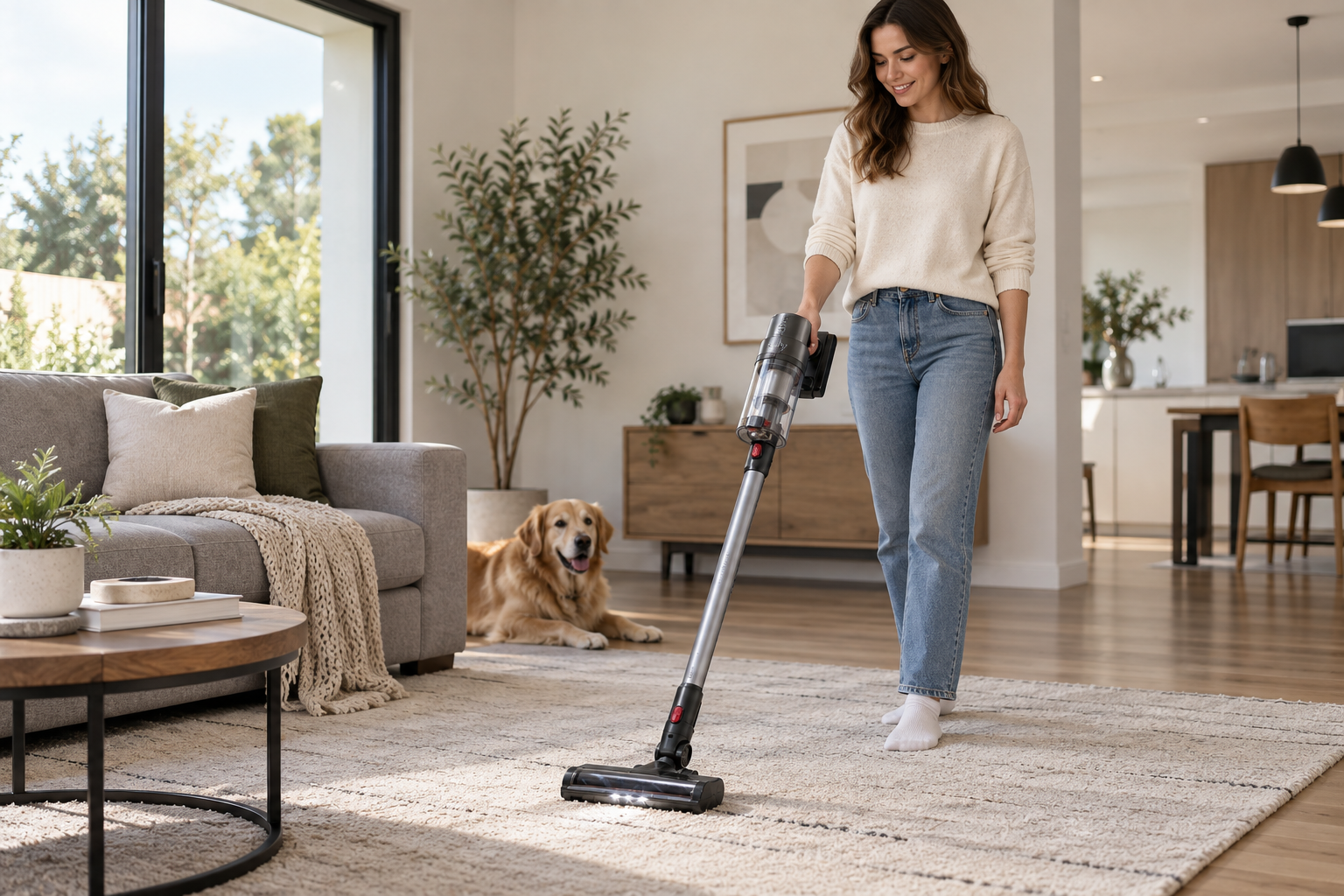
Keeping floors, furniture, and hard-to-reach areas clean can take time, especially when you have to move cords between outlets. A cordless vacuum cleaner offers a more flexible approach, allowing you to move freely between rooms and handle quick cleanups without plugging and unplugging the machine.
Modern cordless models are available with different suction settings, battery capacities, attachments, and filtration systems. Understanding these features can help you choose a vacuum that matches your flooring, home size, and everyday cleaning habits.
What Is a Cordless Vacuum Cleaner?
A cordless vacuum cleaner is a battery-powered cleaning appliance that operates without a direct electrical connection while in use. Most models use rechargeable lithium-ion batteries and are designed to provide convenient mobility throughout the home.
Many cordless vacuums feature a slim stick design, while some can convert into handheld units for cleaning stairs, furniture, vehicles, and smaller spaces. Their lightweight construction may also make them easier to carry between rooms or floors.

How a Cordless Vacuum Cleaner Makes Everyday Cleaning Easier
One of the main advantages of cordless cleaning is freedom of movement. You can move around furniture, travel between rooms, and reach areas where an electrical outlet may not be conveniently located.
A cordless stick vacuum can be particularly useful for everyday messes such as crumbs around dining areas, dust on hard floors, or debris near entrances. Instead of bringing out a larger vacuum for every small cleanup, you can quickly use a cordless model and return it to its charging station afterward.
This convenience may encourage more frequent cleaning, which can help prevent dirt and debris from accumulating.
Consider Battery Life and Charging Time
Battery performance is an important factor when comparing cordless models. Runtime varies depending on battery capacity, suction mode, floor type, and the accessories being used.
Higher-powered settings generally consume battery power faster than standard or eco modes. If you have a larger home, consider a model with longer runtime or a removable battery that can be replaced or charged separately.
Charging time matters as well. Comparing estimated runtime and charging duration can give you a clearer idea of whether a particular rechargeable vacuum cleaner fits your cleaning routine.
Look at Suction Performance Across Different Surfaces
Homes often contain several flooring types, including hardwood, laminate, tile, rugs, and carpet. A vacuum that performs well on one surface may behave differently on another.
When choosing a vacuum cleaner for hardwood floors, look for a floor head designed to collect fine dust without scratching delicate surfaces. For carpets, consider how effectively the brush roll can loosen and collect debris from fibers.
Some cordless vacuums automatically adjust suction according to the surface, while others provide manual power settings. Adjustable performance can be helpful if you regularly move between hard floors and carpets.
Choose a Lightweight Vacuum Cleaner for Comfortable Handling
Weight can have a significant impact on everyday usability. A lightweight vacuum cleaner may be easier to maneuver around chairs, under tables, along stairs, and between different levels of a home.
However, overall weight does not tell the entire story. Balance is equally important. A vacuum with too much weight concentrated around the handle may become uncomfortable during longer cleaning sessions.
Check the Dustbin Capacity
Cordless vacuums typically have smaller dust containers than traditional upright or canister models. A compact dustbin keeps the appliance lightweight, but it may require more frequent emptying.
For larger homes or households with pets, a larger dustbin may reduce interruptions during cleaning. Look for designs that allow you to empty collected debris without having to reach directly into the container.
Regular dustbin cleaning can also help maintain airflow and consistent vacuum performance.
Pay Attention to the Filtration System
Filtration is another useful feature to compare. A cordless vacuum with HEPA filter or another high-efficiency filtration system may capture very small airborne particles that pass through the vacuum.
Keep in mind that filtration performance depends on the entire vacuum design, including how well the system is sealed. Filters also require regular cleaning or replacement according to the manufacturer’s instructions.
Before buying, check whether replacement filters are readily available and how frequently maintenance is recommended.
Consider Attachments for Different Cleaning Tasks
The right attachments can make a cordless vacuum more versatile. Common accessories include crevice tools, dusting brushes, upholstery tools, motorized floor heads, and mini brush attachments.
A crevice tool can help clean along baseboards and between furniture cushions. Upholstery attachments are useful for sofas and chairs, while smaller motorized brushes may help collect hair and debris from fabric surfaces.
For households with cats or dogs, a vacuum cleaner for pet hair with suitable brush attachments may make cleaning furniture, carpets, and other surfaces more manageable.
Think About Storage and Charging
Cordless vacuums are generally designed for compact storage. Some models include wall-mounted charging docks, while others use freestanding charging stations.
Before selecting a model, consider where you will store and recharge it. A conveniently located charging area can make the vacuum easier to grab whenever a quick cleanup is needed.
If wall mounting is required, check whether the necessary mounting hardware is included and whether installation works for your available space.
How to Maintain a Cordless Vacuum Cleaner
Regular maintenance may help your vacuum operate efficiently over time. Empty the dustbin before it becomes overly full and inspect the floor head regularly for tangled hair or fibers.
Wash reusable filters only when the manufacturer specifies that they are washable. Filters should usually be completely dry before being reinstalled.
You should also check air pathways and attachments for blockages. Battery care recommendations vary between manufacturers, so following the instructions provided with your specific model is the safest approach.
What Should You Compare Before Buying?
Choosing the right cordless vacuum depends on how and where you plan to use it. Before making a decision, consider:
- Battery runtime and charging time
- Suction settings and floor compatibility
- Overall weight and balance
- Dustbin capacity
- Filtration system
- Included attachments
- Storage and charging options
- Replacement filter and battery availability
- Manufacturer warranty
- Maintenance requirements
Rather than focusing on a single specification, consider how these features work together for your household.
Is a Cordless Vacuum Cleaner Right for Your Home?
A cordless vacuum may be a practical option if you value portability, quick setup, and easy storage. It can work particularly well for apartments, smaller homes, stairs, vehicles, and routine cleaning between deeper cleaning sessions.
Larger homes or spaces with extensive carpeting may require closer attention to battery runtime and suction performance. Comparing your cleaning needs with the vacuum’s specifications can help you find a suitable balance between portability and performance.
Choosing a Cordless Vacuum Cleaner for Convenient Daily Cleaning
A cordless vacuum cleaner can simplify everyday floor care by eliminating the need to manage a power cord while moving around your home. Battery life, suction performance, filtration, weight, dustbin size, and attachments are among the most useful features to compare.
By considering your flooring, home size, storage space, and typical cleaning tasks, you can choose a model that provides practical performance without paying for features you may rarely use.