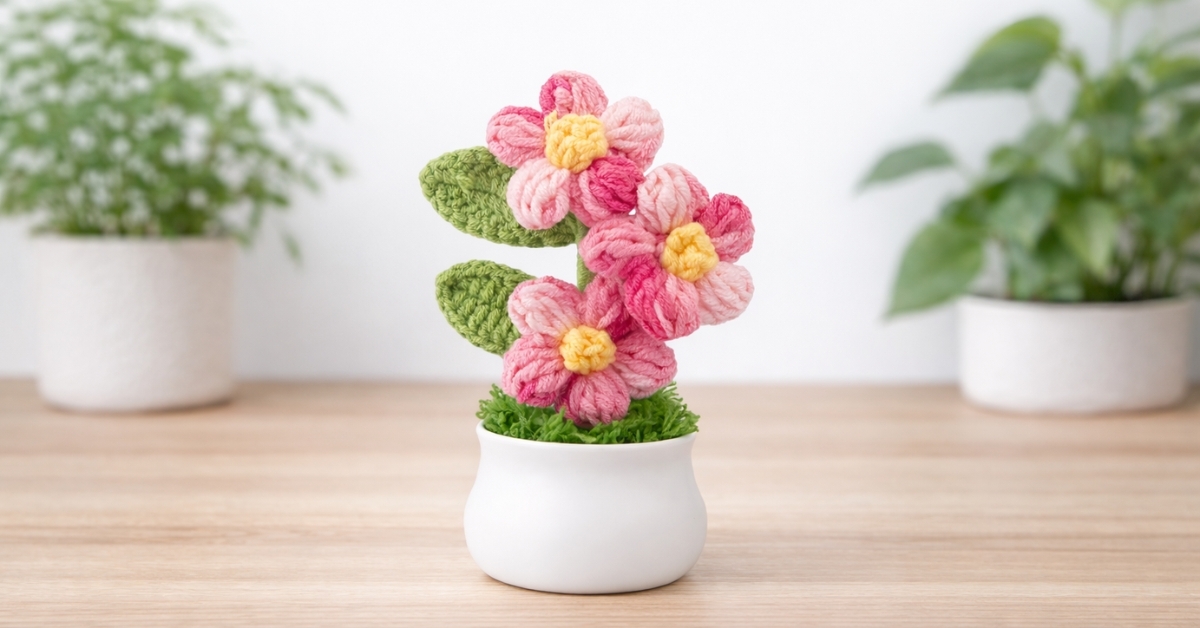
Plants that never droop, shed, or demand attention sound like a small luxury—and that is exactly why DIY Knitting and Crochet Puff Flowers continue to trend in home décor and craft spaces. These textured yarn flowers bring color and charm into living spaces while staying practical and long-lasting. Puff and bobble stitches add depth that flat crochet motifs cannot match, making each bloom feel full and lively.
Crafters often use these flowers for shelf styling, desk décor, or thoughtful handmade gifts. According to the Craft Yarn Council, over 70% of yarn crafters create items for home décor or gifting, showing strong demand for projects that look polished and personal.
Puff flower arrangements fit perfectly into that space because they combine creativity with everyday usefulness. With accessible tools, affordable materials, and flexible designs, this craft works for beginners and experienced makers alike.
DIY Knitting and Crochet Puff Flowers: Materials That Actually Work
Creating durable, realistic yarn flowers depends on choosing the right supplies. After testing several options across multiple projects, the following materials consistently deliver clean results.

Yarn Choices That Hold Shape
Worsted-weight yarn provides the structure needed for crochet puff stitch flowers and knitted textures. Acrylic yarns from brands like Red Heart Super Saver or Lion Brand Basic Stitch cost $4–$6 on Amazon US and resist fading. Cotton yarns, priced around $7–$10, offer sharper stitch definition and a matte finish that works well for modern décor.
Hooks, Needles, and Tools
Crochet hooks in sizes 5.0–6.0 mm allow puff stitches to expand without loosening tension. Clover or Boye hooks typically retail for $5–$9 each on Amazon. For knitters following a knitted puff flower pattern, size 7 or 8 needles create balanced texture.
Structural Support Supplies
Floral wire packs cost $6–$10 and help yarn flowers stand upright. Floral tape averages $4–$6 and blends well with green yarn for seamless stems.
Pots and Finishing Items
Mini ceramic pots range from $8–$15, while terracotta options sit closer to $5–$7. Floral foam bricks cost about $4, and preserved moss averages $6 per bag. These materials anchor yarn flower pot decor securely and hide mechanics cleanly.
Puff Stitch Techniques for Full, Textured Flowers
The puff stitch forms the foundation of most puff stitch crochet tutorial designs. Multiple yarn overs worked into one stitch create raised petals with visual weight.
Key Technique Notes
- Consistent tension keeps petals even
- Five to nine puff stitches suit small blooms
- Ten or more puffs create statement flowers
Adding color contrast between centers and petals improves realism. Yellow or cream centers paired with bold petals reflect natural flower structures and photograph well for online sharing.
Building Stems and Leaves That Look Natural
Leaves give scale and balance to handmade yarn flowers. Single crochet leaves feel sturdy, while double crochet leaves drape more softly. Wrapping yarn around floral wire produces stems that bend without losing shape. Testing showed that stems wrapped with both yarn and floral tape last longer during handling and transport.
Arranging Crochet Flowers for Pots
Balanced placement matters more than the number of flowers. Taller stems belong near the center, with shorter blooms around the edges. Odd groupings tend to feel more organic, a principle borrowed from floral design theory used by professional florists.
Practical Arrangement Tips
- Add small stones to pots for weight
- Secure stems deeply into foam
- Cover foam fully with moss or pebbles
These steps prevent tipping and improve durability for shelf or table displays.
Pattern Variations and Design Options
Some crafters prefer classic daisy shapes, while others lean toward roses or layered blooms. Mixing crochet flowers for pots with knitted leaves adds texture contrast. This hybrid approach appeals to makers who enjoy exploring both techniques.
From a design perspective, minimalists favor neutral yarns and simple pots. Maximalists enjoy bold color palettes and dense arrangements. Both styles work well with puff flower construction.
Limitations and Honest Considerations
Yarn flowers hold up well indoors, yet direct sunlight may fade colors over time. Acrylic yarn handles dust better than wool but lacks the natural feel some prefer. Cotton yarn offers texture clarity, though it may soften after repeated handling. These trade-offs matter when choosing materials for long-term display.
Conclusion
DIY puff flower arrangements add warmth and personality without ongoing upkeep. With accessible tools, flexible patterns, and affordable supplies, this project suits hobbyists who enjoy decorative crafts with lasting value. Exploring yarn types, stitch variations, and pot styles opens room for creativity beyond one finished piece.
Browsing Amazon reveals helpful tools, yarn options, and display accessories worth checking out, along with plenty of related craft ideas to explore at the same time.