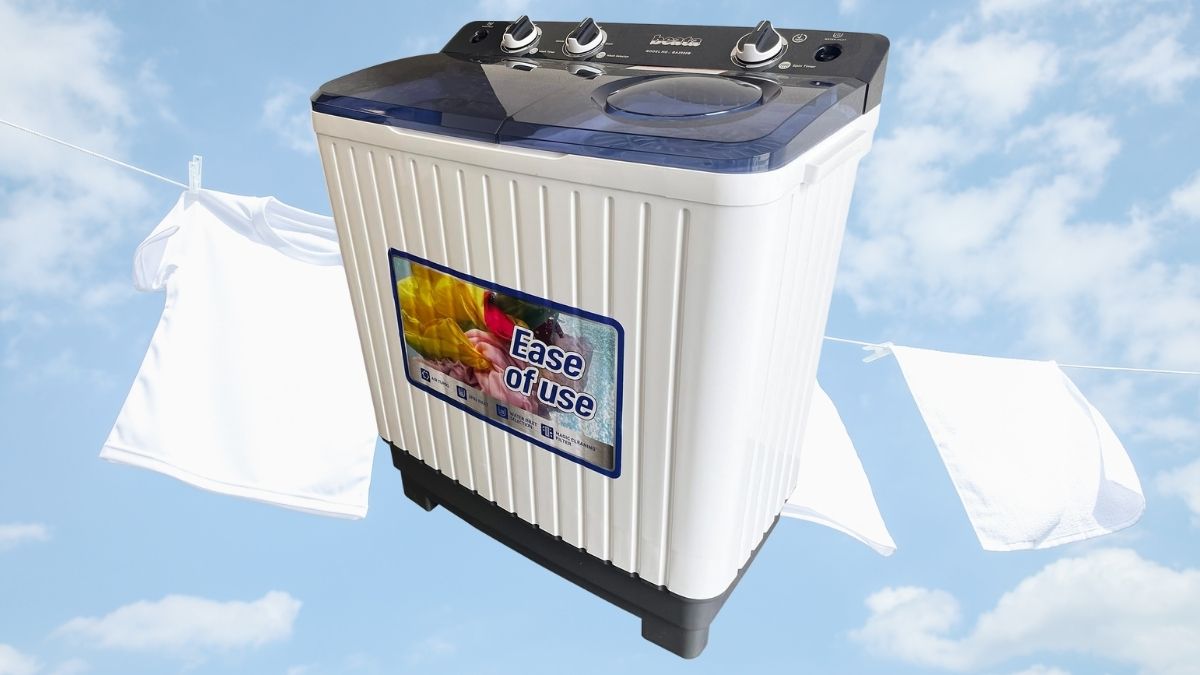
If you don’t have washer hookups, laundry can turn into a weekly project. You’re hauling bags, watching the clock, and paying per load. Portable washing machines exist to cut that friction. They bring laundry back into your own space, without requiring permanent plumbing or a dedicated laundry room.
In 2025, portable washers range from tiny countertop units to higher-capacity twin tubs that can handle day-to-day loads. The right pick depends on your space, your tolerance for hands-on steps, and how much laundry you want to process in one session.
What a Portable Washing Machine Actually Is
A portable washing machine is a compact washer designed for flexibility. Most connect to a standard faucet with an adapter, fill with water, wash using a small motor-driven agitator, then drain into a sink, tub, or floor drain.
Before you dive into types, it helps to separate marketing language from what matters in real use.

What you’re really buying
- A washer that works with temporary water connections
- A smaller tub capacity than a full-size machine
- Lower water and power use per cycle
- The ability to store or roll it out of the way when not in use
Some models also add a dedicated spin tub (twin tub), which changes how fast you can get through laundry.
Portable Washer Types and the Tradeoffs
There isn’t one “best” type. Each style fits a different routine. Thinking in tradeoffs keeps you from buying something that looks great on paper but feels annoying after week two.
Twin tub models
Twin tubs have two compartments: one for washing and one for spinning. You wash in one side and move items to the spinner side.
- Why you might like it: Faster throughput, more control, strong spinning for quicker air-drying
- Why you might not: You’re doing a few manual steps, like transferring clothes and managing drain timing
Single tub automatic models
These run wash, rinse, and spin in one drum, closer to a traditional washer.
- Why you might like it: More “set it and forget it”
- Why you might not: Often slower overall than twin tubs, and some models have smaller spin performance
Countertop and mini washers
These are built for very small loads like delicates, baby items, or a couple of shirts.
- Why you might like it: Fits almost anywhere
- Why you might not: You’ll outgrow the capacity fast if it’s your primary washer
Manual, off-grid options
Hand-crank or non-electric designs exist for camping and emergency use.
- Why you might like it: No power needed
- Why you might not: It’s labor-intensive and not ideal for regular weekly laundry
Why a 22 lb Twin Tub Gets Mentioned So Often
A 22 lb twin tub setup is popular because it hits a “sweet spot” for small spaces. You get meaningful capacity without the footprint of a full washer. Many configurations split into a 14 lb wash tub and an 8 lb spinner.
Before you assume bigger is always better, it’s worth seeing how this format plays out in real life.
What the capacity split means for you
- The wash side can handle everyday loads like shirts, towels, and casual wear
- The spinner side is smaller, so bulky items may need to be spun in batches
- You can overlap tasks: wash one load while spinning the previous one
Performance perspective: two ways to look at it
If you’re focused on speed, twin tubs often win because you’re not waiting for one drum to do everything. If you’re focused on simplicity, a single-tub automatic might feel easier because there’s less hands-on work.
Neither is “right.” It depends on whether you prefer control or automation.
How to Choose the Right One for Your Setup
The best portable washer is the one that fits your space and routine without creating new hassles. Small details, like faucet style or drainage height, can matter more than capacity alone.
Before narrowing models, run through these practical checkpoints.
What to measure and verify
- Floor space and clearance: Include lid opening and hose routing
- Water access: Standard faucets are easiest; pull-down styles can be trickier
- Drain plan: Sink, tub, or floor drain, and whether you need a pump
- Power: Most run on standard outlets, but avoid weak extension cords
- Noise tolerance: Spin cycles can be loud in tight apartments
Tips that Make Portable Laundry Less Annoying
Portable washing works best when you treat it like a system, not just an appliance. A few habits improve results and reduce mess.
Before your first full load, set yourself up for smoother cycles.
Simple habits that help
- Don’t overload the wash tub, even if it “fits”
- Use small amounts of HE detergent to avoid excess suds
- Spin in short bursts, then re-balance items and spin again
- Leave the lid open after use so moisture can evaporate
What You Should Expect Long-Term
Portable washers can save money and time, but they’re not identical to full-size machines. You may do smaller loads more often. You may air-dry more. And you’ll likely pay more attention to balancing during spins.
If you’re okay with those realities, portable washing can feel like a major upgrade—especially when the alternative is paying per load and losing hours every week.
This item is part of Amazon Today’s Deals in the Home Appliances category, and you can explore more space-saving laundry products within the same category.