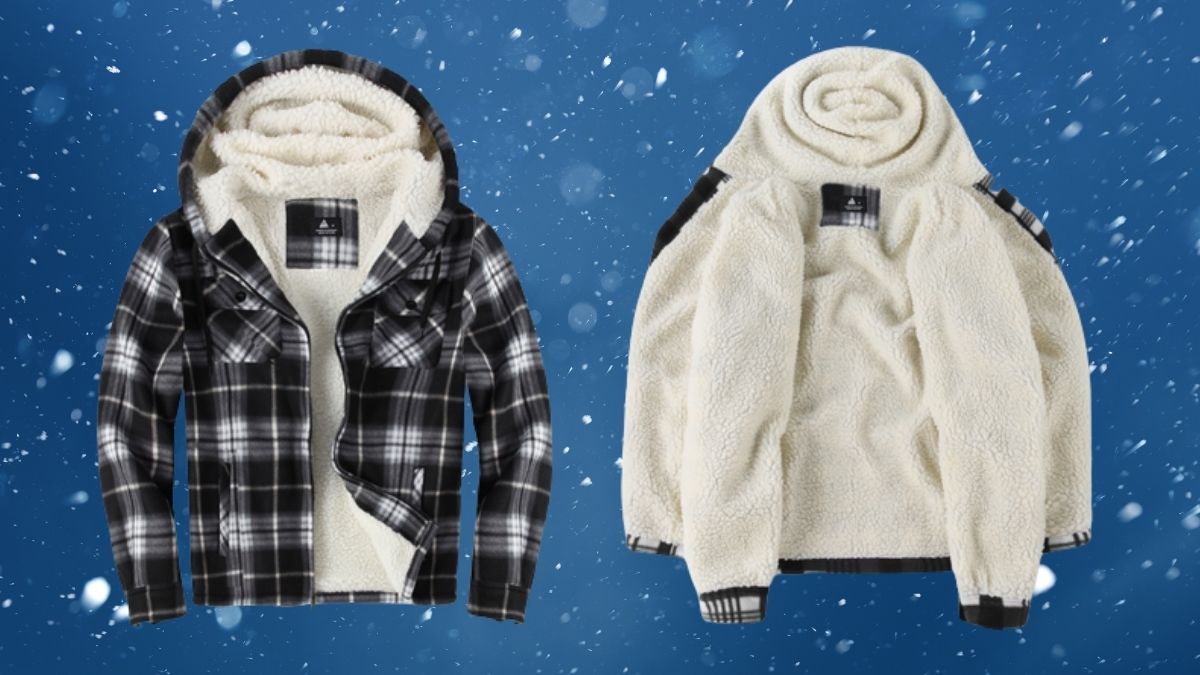
When temperatures drop, you usually end up choosing between a heavy coat and a light layer that does not hold heat. A flannel shirt jacket sits in the middle. It is meant to look casual, but still handle real winter days.
The SCODI Men’s Flannel Shirt Jacket leans into that hybrid idea. You get a plaid flannel-style exterior, plus sherpa lining for warmth. It is designed for everyday wear, not just outdoor trips.
At the same time, a shirt jacket is not a replacement for every winter coat. Your climate, your commute, and how much you layer will decide if it is your main outer layer or your dependable mid-layer.
What makes it “shirt jacket” instead of just a flannel
The main difference is structure and insulation. A standard flannel is mostly a style layer. A shirt jacket adds warmth and more jacket-like features.

With the SCODI, you are looking at a few core design choices:
- Sherpa lining through the body and sleeves for consistent warmth
- A full-front zipper so you can vent when you move between indoors and outdoors
- Multiple pockets for daily carry and hand warming
- An attached hood for wind and light weather changes
If you like simple winter dressing, this setup can replace juggling a hoodie plus a thin flannel. If you prefer classic buttons and no hood, the same features might feel less “heritage” and more “modern casual.”
Warmth and comfort: what you can realistically expect
From a practical perspective, sherpa lining is about heat retention. It traps warmth close to your body. That is why these jackets feel cozy fast.
You also get a warmth-to-weight trade-off. Compared to heavier coats, a sherpa-lined shirt jacket can feel easier to move in. That matters if you drive, run errands, or work outdoors with your arms moving often.
A limitation is breathability during high activity. If you hike hard or do physical work, sherpa can feel warm quickly. That is where the zipper becomes more important than it sounds.
Fit and layering: two common viewpoints
Fit is where most people form opinions. You will usually see two camps with shirt jackets.
If you want it as your main jacket: you may prefer a relaxed fit. That gives you room for a sweater or thermal base. It also keeps movement comfortable through the shoulders and elbows.
If you want it as a mid-layer: you may want a closer fit. A trimmer cut sits better under a shell. It also avoids bunching in the sleeves.
The SCODI is positioned as relaxed and layer-friendly. That is a plus if you run cold. It can be a drawback if you want a sharper silhouette.
Pockets, zipper, and hood: why the details matter
These features decide if you actually use the jacket daily. They also affect how “jacket-like” it feels.
- Chest pockets with closures help if you carry small essentials
- Side hand pockets add comfort on cold days
- Zipper closure gives faster on-off than buttons
- Hood adds wind coverage without needing a separate hat
A potential objection is that hoods can feel bulky behind the neck. If you wear it under another coat, the hood can stack up. If you wear it as your top layer, the hood can be a real benefit.
Durability and care: what to watch for
A sherpa-lined piece is only as good as its construction. Seams, cuffs, and pocket corners take the most stress.
You want stitching that holds up through repeated wear and washing. You also want a zipper that does not snag or warp. Those are common failure points in this category.
Care is usually simple with this type of jacket. Machine washing is convenient, but you should expect that frequent high heat can wear fabrics faster. If long-term looks matter to you, gentler cycles help.
Style and versatility: casual is the point
This is not dress outerwear. It is meant to look relaxed and familiar.
You can style it in a few easy directions:
- jeans and boots for a rugged look
- joggers and sneakers for casual comfort
- workwear pants for a utilitarian vibe
- layered over a hoodie for cold mornings
If your wardrobe is mostly clean and minimal, plaid can feel loud. In that case, you can treat it as your statement piece and keep the rest neutral.
The honest limits: when it might not be enough
This is where expectations matter. A sherpa-lined shirt jacket can handle cold days, but it is not built like a parka.
It may fall short if:
- you face heavy rain or wet snow often
- you spend long hours outside in severe wind
- you need technical insulation for very low temperatures
In those situations, it works best as a mid-layer under a waterproof shell. You still get the comfort of sherpa, plus real weather protection.
Is it worth it for your winter rotation?
If you want a daily winter layer that feels soft, warm, and easy to wear, this style makes sense. You get the comfort of a lined jacket without the heavy, stiff feel of some coats.
If you need serious storm protection or deep-winter performance, you should treat it as part of a layering system. That is not a flaw. It is simply what a shirt jacket is built to do.
You can check out this jacket on Amazon on the Holiday Gifts category.